Chia is the densest common plant source of omega-3 ALA after flax, at roughly 2.5 g per tablespoon. Its mucilage (a soft, slippery plant gel) does the clinical work: it swells tenfold in water, moderates post-prandial glucose and softens stool.
Always hydrate it before you swallow it. Dry chia in a dry throat has caused documented esophageal impaction.
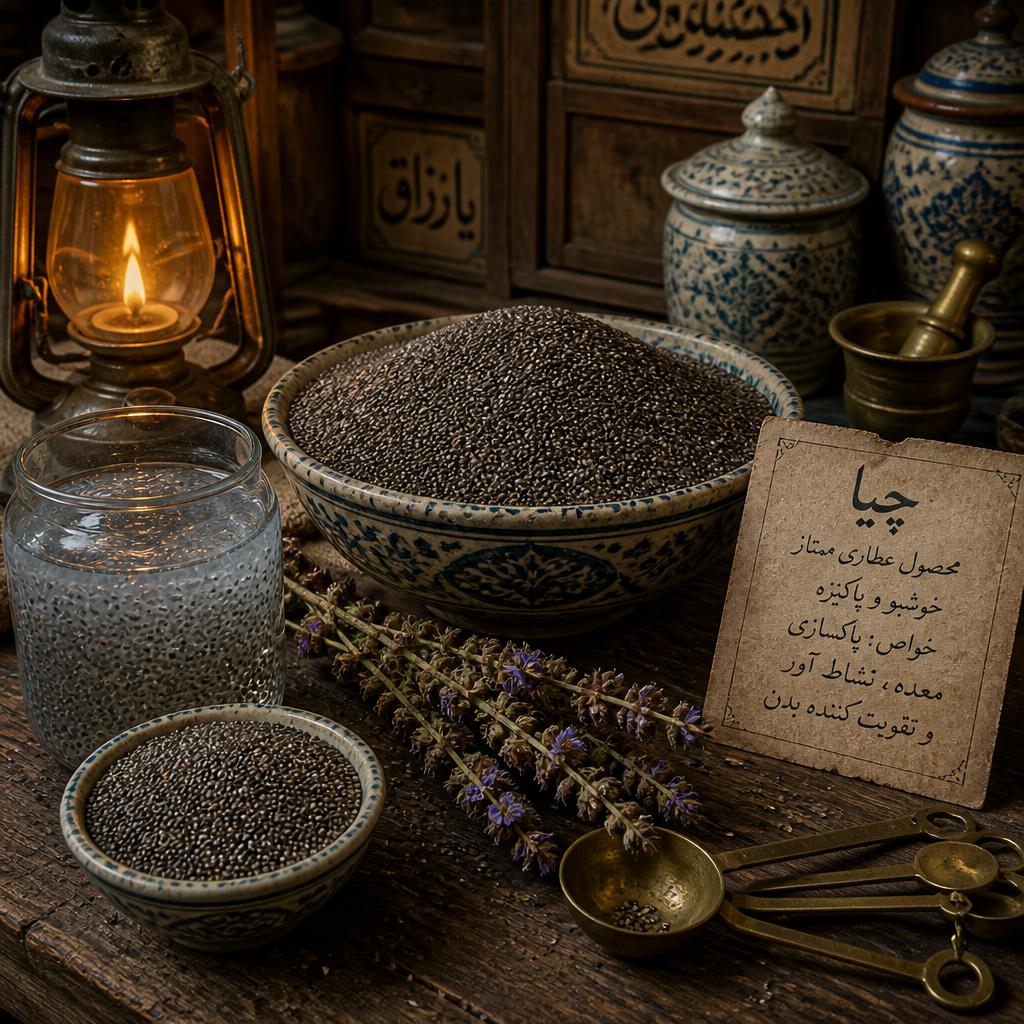
Think of it as a modern cousin to Persia's classical tokhm-e sharbati — a different plant, but a similar gel and a similar summer role.
Chapter 2 of 19
Getting to Know Chia Seeds
Chia (Salvia hispanica) is a Lamiaceae herb first domesticated by the Aztecs, and it's now one of the most studied seeds to arrive in the modern kitchen. A single tablespoon (~12 g) gives you roughly 2.5 g of omega-3 alpha-linolenic acid (ALA), 4 g of fibre split between insoluble and mucilage-forming soluble fractions, plus meaningful magnesium, calcium, phosphorus, and manganese. What makes chia special is how it takes up water. Soak it in water, milk, or fruit juice for 10–20 minutes and it expands ~10× into a translucent gel. That makes it an easy fit in modern Persian sharbat beside tokhm-e sharbati (basil seed). In human trials the effects are modest but consistent: small changes in blood fats, blood pressure, and blood sugar after meals at doses of 25–40 g/day for 8–12 weeks.
Chapter 3 of 19
Why It Matters
If you want a small daily habit for the heart, the gut, and steadier post-meal energy, a soaked spoon of chia is easy to keep up. You don’t need to grind anything or refrigerate an oil. You only need to give the seeds enough water.
A soaked spoon of chia is one of the easiest daily habits on the modern Persian shelf. It gently supports three important parts of healthy aging — lipids, blood pressure, and bowel comfort — while adding plant calcium, ALA, and polyphenols (protective plant compounds). There's no grinding, refrigeration, or cooking. Just soak it first and drink water alongside.
What That Means Day to Day
The soluble mucilage (a soft, slippery plant gel) moderates post-prandial glucose and softens stool. The same gel supports satiety (the feeling of being full) and comfortable summer hydration.
Its plant omega-3 ALA lifts the daily ω3:ω6 balance without marine oils. At around 25–40 g a day, small trials show modest reductions in blood pressure and improved lipid ratios.
For people avoiding dairy it supplies meaningful calcium, magnesium and iron, alongside one of the highest antioxidant polyphenol (protective plant compounds) densities among common edible seeds.
Chapter 4 of 19
The Plant Itself
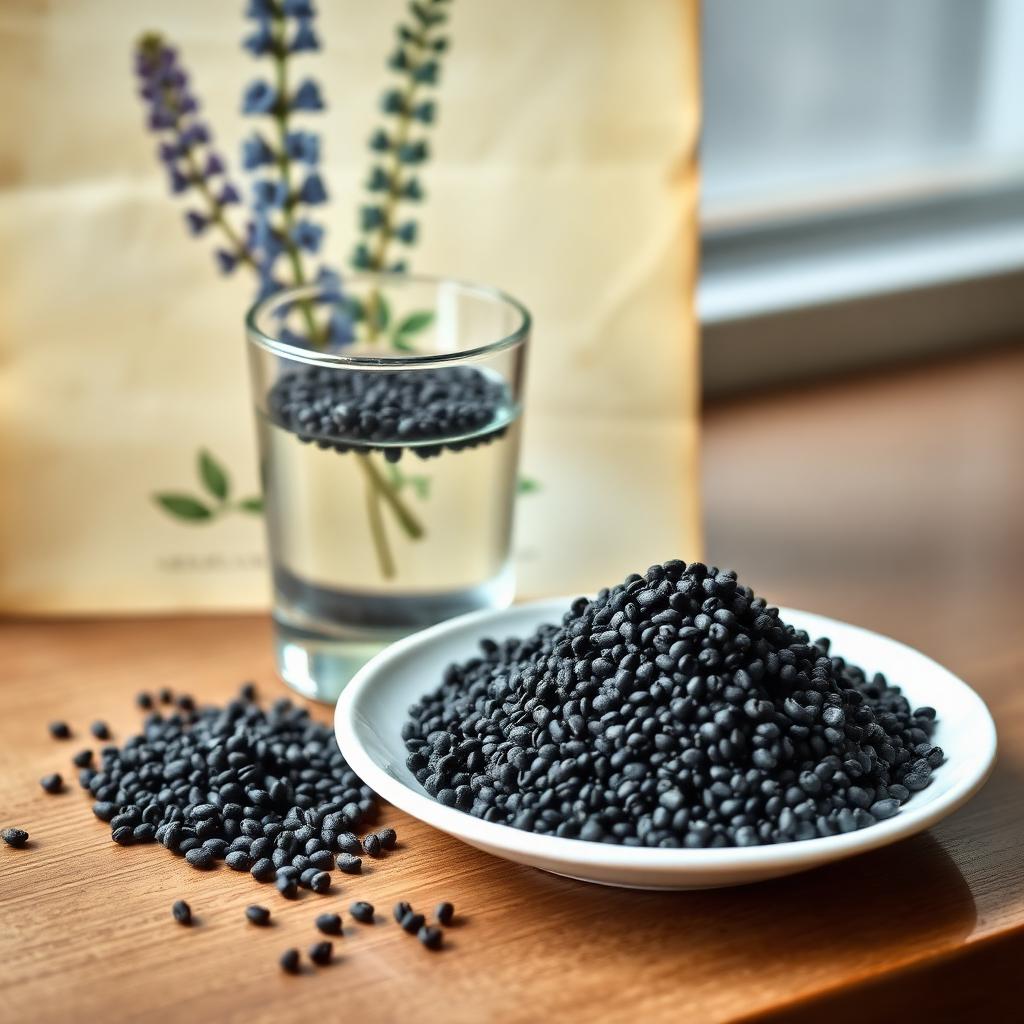
An annual herb 60–120 cm tall with square Lamiaceae stems, opposite ovate leaves, and terminal spikes of small pale-blue to purple flowers. Each spike matures into 4–8 lens-shaped seeds ~1 mm long, mottled black, grey and cream according to cultivar. The seeds develop a thick hydrophilic mucilage (a soft, slippery plant gel) on contact with water — the visible signature of the plant.
Family: Lamiaceae (mint family).
Chapter 5 of 19
What It Contains
Primary compounds
Alpha-linolenic acid (ALA, ω-3) — ~60% of seed lipid. ~2.5 g per Tbsp. A top plant source alongside flax.
Soluble fibre (mucilage): arabinoxylan/xylose-rich polysaccharides that hydrate into a viscous gel and moderate glucose absorption · Insoluble fibre: supports stool bulk and colonic transit.
Other Constituents
Chlorogenic and caffeic acids: polyphenol (protective plant compounds) antioxidants unusual for a Lamiaceae seed at this density.
Calcium (~80 mg per Tbsp), magnesium, phosphorus, iron, and manganese.
Quercetin (a plant compound found in onions, apples and tea) and kaempferol at low but measurable levels.
Chapter 6 of 19
What It Contains
Vitamins
Thiamin, Niacin
Other notable constituents
Minerals: Zinc · Healthy Fats: Omega-3 ALA, Omega-6 linoleic acid · Protein: ~4 g per 2 Tbsp
Notable: Complete plant protein profile
Chapter 7 of 19
What Studies in People Show
Moderate evidence
Chia supplementation significantly reduced post-prandial glucose response versus a matched wheat control in a randomised crossover trial in healthy adults.Moderate evidence
In overweight and obese adults with type-2 diabetes, chia added to a calorie-restricted diet produced greater weight loss and larger reductions in C-reactive protein than an oat-bran control over 6 months.Moderate evidence
Chia is one of the densest plant sources of alpha-linolenic acid, and its inclusion in a Western diet raises plasma ALA and EPA within 6 weeks.Moderate evidence
Early research
Chia seed at 25–40 g/day for ≥12 weeks modestly reduces systolic blood pressure and improves lipid profile in pooled randomised trials.Emerging evidence
Chapter 8 of 19
Preparation and Kitchen Use
Soak 1 Tbsp in ½ cup water, milk, or juice for 10–20 minutes before eating — this is the non-negotiable rule.
Refrigerate any leftover soaked chia for up to 4 days in a sealed jar.
For baking: prepare a chia 'egg' (1 Tbsp seeds + 3 Tbsp warm water, rested 5 minutes).
Grind briefly in a spice grinder for smoothies where a gel-free texture is preferred.
Chapter 9 of 19
Preparation and Kitchen Use: Other Ways to Use It
Store the dry seed in a cool cupboard for up to 2 years — the outer coat stabilises the ALA.
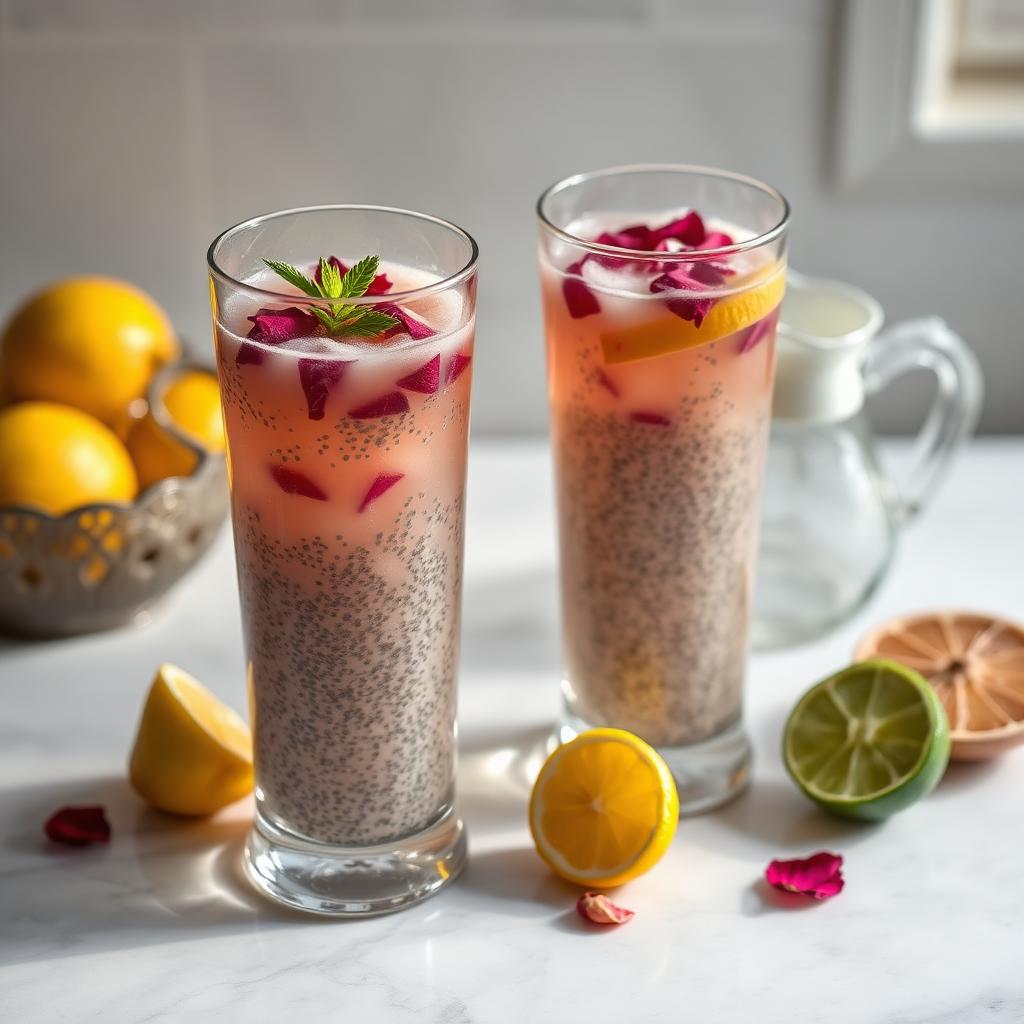
Stir a soaked spoon into rosewater sharbat with lemon and ice — the Persian summer answer.
Sprinkle a soaked spoon onto thick strained yogurt with honey and cinnamon as a breakfast bowl.
Drink a glass of plain water alongside every dose — mucilage (a soft, slippery plant gel) without water can bloat.
Chapter 10 of 19
Medicines and Interactions
Medication interaction:
Warfarin (a blood-thinning medicine), DOACs (apixaban, rivaroxaban, edoxaban, dabigatran), antiplatelets — The ALA content confers mild antiplatelet activity — culinary 1–2 Tbsp/day isn't clinically important. Concentrated chia-oil supplementation on anticoagulants (blood-thinning medicines) can add to bleeding risk; discontinue supplements 1–2 weeks before elective surgery. (low concern)
Medication interaction:
Antihypertensives (ACE inhibitors, ARBs, CCBs, diuretics) — Small trials show a modest additional blood-pressure reduction with ~25–40 g/day chia. Compatible with existing antihypertensive therapy — monitor readings when starting a daily dose. (low concern)
More Interactions to Know
Medication interaction:
Antidiabetics (insulin, sulfonylureas, metformin, GLP-1 agonists) — Chia mucilage (a soft, slippery plant gel) measurably blunts the post-meal glucose curve. Gentle additive effect at culinary doses; monitor blood glucose when starting a daily dose alongside insulin or a sulfonylurea to avoid nuisance hypoglycemia (blood sugar dropping too low). (moderate concern)
Medication interaction:
Oral medications with narrow absorption windows (levothyroxine, oral bisphosphonates, tetracyclines, fluoroquinolones) — The mucilage (a soft, slippery plant gel) can bind and delay absorption. Space chia doses at least 1–2 hours from prescription medications, especially levothyroxine and oral bisphosphonates. (moderate concern)
Chapter 11 of 19
Who Should Be Careful
General caution:
Start with 1 tsp and build to 1–2 Tbsp over a week to let the gut adjust to the added mucilage (a soft, slippery plant gel).
Medication interaction:
Drink a glass of plain water with every dose — mucilage without water can bloat.
General caution:
Concentrated chia intake (>50 g/day) with a low water intake can worsen constipation instead of relieving it.
General caution:
Active bowel obstruction, stricture, or severe gastroparesis — swelling mucilage (a soft, slippery plant gel) can worsen the blockage.
General caution:
Severe dysphagia (advanced swallowing difficulty) — dry seed carries a real oesophageal risk.
Allergy:
Known Salvia / Lamiaceae seed allergy (rare but documented) — avoid seed and cold-pressed oil.
Chapter 12 of 19
Pregnancy, Children and Older Adults
General
Older adults:
Always hydrate before swallowing — dry chia in a dry oesophagus has caused documented impaction, particularly in older adults.
Pregnancy and breastfeeding
Pregnancy and breastfeeding:
Culinary chia (up to about 1 Tbsp/day, always soaked before consumption) is generally regarded as safe during pregnancy and breastfeeding, and is a useful plant source of ALA, calcium, and magnesium in this window. Concentrated chia-oil supplements aren't well studied in pregnancy — reserve for the non-pregnant window and discuss with the pregnancy provider before starting any daily supplement dose.
Chapter 13 of 19
Pregnancy, Children and Older Adults: Other Groups to Consider
Children
Children:
Chia is best introduced from about 12 months onwards, always in a pre-soaked or pudding form — never as dry seed offered from a spoon. Small quantities (¼–1 tsp) stirred into yogurt, oatmeal, or fruit puree provide plant calcium and mild ALA support. Honey-sweetened chia sharbat (as in the recipe above) isn't appropriate under 12 months because of the honey, not the chia.
Older adults
Older adults:
Chia is a quiet longevity food for older adults — it addresses three of the older-kitchen concerns at once (lipids, blood pressure, and stool consistency) while adding plant calcium for people cutting back on dairy. The safety rule that matters is hydration: always soak before swallowing, and pair every dose with a glass of plain water. Space narrow-window medications (levothyroxine, oral bisphosphonates) by 1–2 hours from the chia dose.
Chapter 14 of 19
Traditional Persian Perspective
Persian temperament: Cool & Moist (1st degree seed — mucilage). By its behaviour — cooling, moistening, gel-forming — Persian medicine reads chia as a close cousin of tokhm-e sharbati (basil seed): bārid raṭb, a summer seed, a mudirr (gentle diuretic) and mulayyin (a soft demulcent laxative). Warmed with a pinch of cinnamon or cardamom in cooler months to prevent the classic 'cooling seed on a cold constitution' complaint of morning heaviness.
In the Household
Chia belongs to Mesoamerican rather than Persian food culture, but the Persian household reads it by its behaviour, and by that reading it's a cousin of tokhm-e sharbati: cool, moist, and gel-forming. That places it where the classical cooling seeds are used — summer thirst, gastric heat, a dry and stubborn bowel, an elder who needs softening rather than stimulating.
The same logic supplies the correction: because a cooling seed sits badly on a cold constitution or a cold morning, it's warmed with a pinch of cinnamon or cardamom, and always soaked until it gels before eating.
Chapter 15 of 19
Traditional Persian Perspective: Older Uses
Aztec long-distance runner's ration is soaked and carried in small water gourds.
Overnight yogurt-and-chia bowl for a moistening, cooling breakfast during hot months.
Chia-and-water as a first-line household support for mild constipation and dry stool.
Case reports document oesophageal impaction from swallowing dry chia seeds without adequate hydration — the safety signal that anchors every clinician's dosing advice. Rated: traditional observation.
EU Novel Food Regulation authorised Salvia hispanica seed as safe for use in bread, breakfast cereals, and pre-packed dry seeds at defined daily intakes. Rated: traditional observation.
Chia was a staple endurance food for Aztec and Maya communities and is now used globally in puddings, drinks, and plant-forward breakfasts.
Chapter 16 of 19
Questions People Ask
Do I need to soak chia before eating it?
Yes. Always. Dry chia in a dry throat has caused documented oesophageal impaction. Soak in water, milk, or juice for at least 10–20 minutes, or use a pudding, sharbat, or overnight yogurt bowl — never spoon dry seeds straight from the jar.
How long before I notice a change?
Bowel comfort often shifts within a week. Blood-pressure, blood-fat, and blood-sugar changes are usually reported after 8–12 weeks of ~25–40 g/day. Small changes, quietly compounded.
Is chia safe during pregnancy?
Culinary chia (up to about 1 Tbsp/day, soaked) is generally regarded as safe in pregnancy and breastfeeding and contributes usefully to plant ALA and calcium. Reserve concentrated chia-oil supplements for the non-pregnant window and discuss any daily supplement with the pregnancy provider.
Oesophageal impaction from dry chia: case report — Am J Gastroenterol, PubMed 25317955. https://pubmed.ncbi.nlm.nih.gov/25317955/.
Salvia hispanica: eU Novel Food authorisation — European Commission Food Safety. https://food.ec.europa.eu/.
Chapter 18 of 19
Sources (part 2 of 3)
USDA FoodData Central: chia seed — US Department of Agriculture. https://fdc.nal.usda.gov/.
Sad Giah Hezar Darman (صد گیاه و هزار درمان) — One Hundred Plants and One Thousand Remedies — Dr. Hossein Erfani, 4th edition (1375 / 1996–1997). Primary traditional Persian herbal reference cited throughout this platform. Presented as traditional knowledge, not as modern medical proof.
Office of Dietary Supplements: fact Sheets — US National Institutes of Health (NIH). https://ods.od.nih.gov/factsheets/list-all/.
Herbal Database: memorial Sloan Kettering Cancer Center. https://www.mskcc.org/cancer-care/diagnosis-treatment/symptom-management/integrative-medicine/herbs.
Herbs at a Glance: uS NIH National Center for Complementary and Integrative Health (NCCIH). https://www.nccih.nih.gov/health/herbsataglance.
Chapter 19 of 19
Sources (part 3 of 3)
FoodData Central: searchable nutrient database — US Department of Agriculture (USDA). https://fdc.nal.usda.gov/.
The Nutrition Source: harvard T.H. Chan School of Public Health. https://www.hsph.harvard.edu/nutritionsource/.
PubMed — peer-reviewed biomedical literature — US National Library of Medicine. https://pubmed.ncbi.nlm.nih.gov/