Chamomile is an apple-scented evening tea with mild GABA-binding activity from apigenin. Randomised trials support it for generalized anxiety and for sleep onset in older adults.
For most adults, an ordinary cup is gentle enough for daily use. Children need a weaker preparation and adult guidance.
Drink it thirty to sixty minutes before bed, once the lights are low and the day is winding down.
Chamomile (Matricaria chamomilla) is one of the world's most familiar calming herbs. Its flowers smell faintly of apples and contain apigenin, a plant compound that works on some of the same calming pathways as anti-anxiety medicines, though much more gently. For most people, the simple evening cup is where chamomile fits best.
Chapter 2 of 16
Why Herbalists Still Reach for It
Broken sleep and lasting anxiety can wear on the heart, brain, and metabolism. Chamomile may gently help with both. It costs little, feels familiar, and unlike many evening remedies, it has been tested in randomized trials.
Sleep often becomes lighter after 60, while digestion may become more sensitive. In one trial, older adults with insomnia slept better after taking chamomile extract. Another trial found less anxiety after eight weeks. An evening cup is a simple, low-cost way to support sleep, mood, and digestion together.
Chamomile helps people relax, which can make sleep easier to fall into. It can also settle ordinary digestive upset and gas.
Some women find that it eases menstrual cramps. The flowers also contain mild antioxidants and can soothe irritated skin.
Chapter 3 of 16
What Is In It
Primary compounds
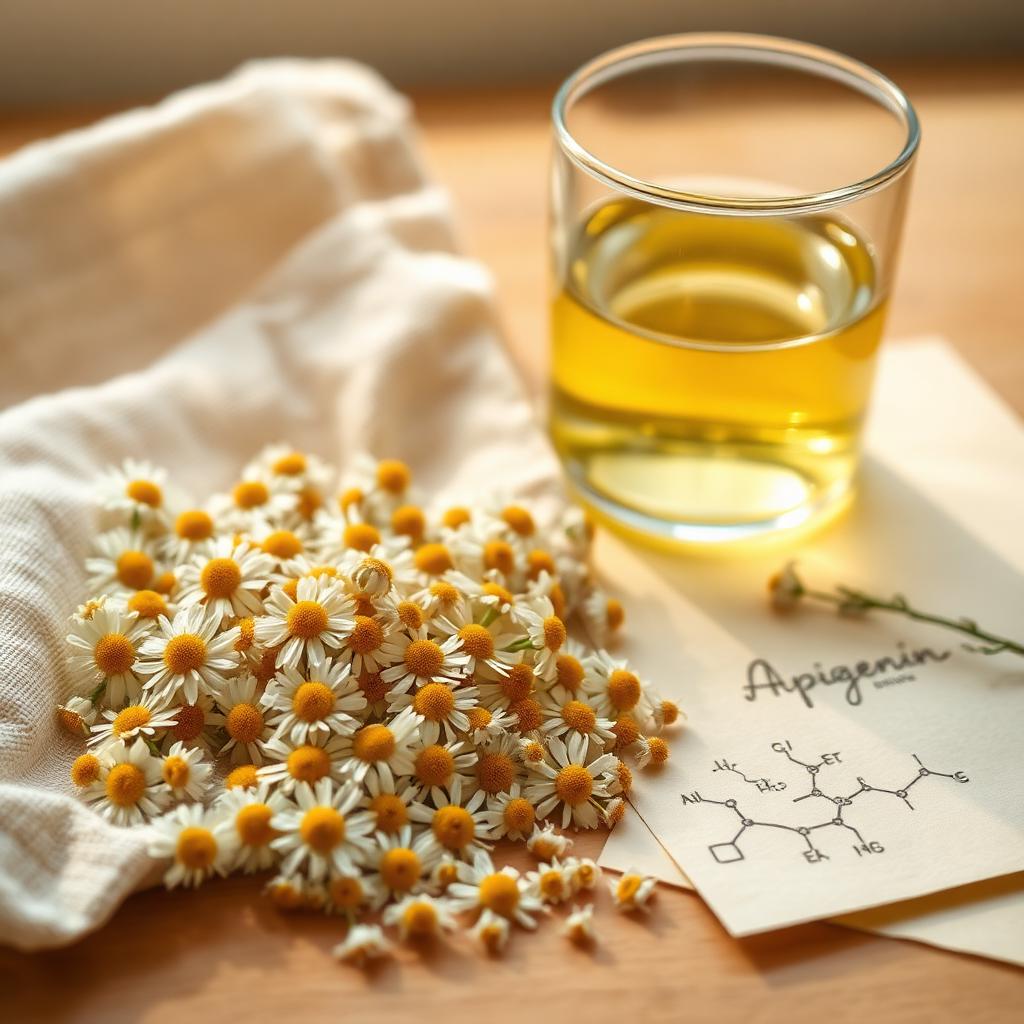
Apigenin is a flavonoid (a family of protective plant compounds) that binds to the benzodiazepine site of GABA-A receptors. It carries much of chamomile's calming action.
α-Bisabolol and bisabolol oxides are soothing volatile oils (the concentrated aromatic oil of the plant) found in chamomile essential oil.
Chamazulene is the deep-blue anti-inflammatory compound that appears during distillation.
Coumarins have mild anticoagulant (blood-thinning medicines) activity, which is why chamomile has real drug-interaction cautions.
Other notable constituents
Antioxidants: Luteolin, Quercetin (a plant compound found in onions, apples and tea) · Notable: Volatile floral oils, Mild bitter compounds
Chapter 4 of 16
What Studies in People Show
Strong evidence
NCCIH review: chamomile is generally well-tolerated. Noted interactions with warfarin (a blood-thinning medicine) and cyclosporine.Strong evidence
Moderate evidence
Chamomile extract 500 mg × 3/day for 8 weeks significantly reduced generalized-anxiety scores compared with placebo.Moderate evidence
Further Findings
In older adults with insomnia, chamomile extract improved sleep quality vs. placebo over 28 days.Moderate evidence
Long-term chamomile use (26 weeks) reduced relapse of moderate-to-severe GAD in a Phase 2 trial.Moderate evidence
Early research
Systematic review (a careful summary of all the studies on a question) of chamomile in postpartum women found small improvements in sleep and depressive symptoms.Emerging evidence
Chapter 5 of 16
How It Is Prepared
Drink chamomile 30–60 minutes before bed. That gives it time to work without leaving a full cup of liquid for the moment you lie down.
The everyday preparation is damkardeh: one to two teaspoons of dried flowers per cup, covered for eight to ten minutes.
A stronger infusion (a drink made by steeping the plant in hot water) has three other uses. Soak a cloth in it as a warm compress for skin or eyes. Add it to warm water as a sitz or herbal bath for cramps. Or breathe it as a steam inhalation for sinus tension and head colds.
Chapter 6 of 16
How It Is Prepared: Other Ways to Use It
Steep one to two teaspoons of dried flowers for five to ten minutes, with lavender or lemon balm before bed. The cooled tea works as a compress for irritated skin.
Brew one to two teaspoons of dried flowers for eight to ten minutes. Drink it thirty to sixty minutes before bed with the screens off and the lights low.
For a Persian-style sleep tea, add linden and a pinch of rose petals. Any tea left in the pot can cool for use as a compress on irritated skin or tired eyes.
Chapter 7 of 16
Medicines and Interactions
General cautions
Medication interaction:
Stop high-dose extracts two weeks before surgery.
Specific medicines
Medication interaction:
Warfarin (a blood-thinning medicine) & DOACs — Coumarins in chamomile can potentiate anticoagulation; occasional case reports of bleeding. (high concern)
Medication interaction:
Benzodiazepines / other sedatives — Additive calming effect; not dangerous, but stack thoughtfully. (moderate concern)
Medication interaction:
Cyclosporine, tacrolimus (CYP3A4 substrates) — Chamomile may modestly affect metabolism — separate by at least 2 hours. (moderate concern)
Medication interaction:
Iron supplements — Tannins (plant compounds that give a dry, puckering taste) may reduce absorption — take iron at a different time of day. (low concern)
Chapter 8 of 16
Who Should Be Careful
Allergy:
Asteraceae allergy (ragweed, daisy, chrysanthemum) — chamomile belongs to the same family, so a reaction is possible if you react to any of them.
Pregnancy and breastfeeding:
Pregnancy — moderate culinary tea is fine; avoid high-dose extracts (uterine-stimulating in large amounts).
Chapter 9 of 16
Pregnancy, Children and Older Adults
Pregnancy and breastfeeding
Pregnancy and breastfeeding:
Moderate culinary tea — one weak cup a day — has centuries of gentle use in Persian households during pregnancy. High-dose extracts and essential oil (the concentrated aromatic oil of the plant) should be avoided; they can stimulate the uterus. During breastfeeding, chamomile is generally considered compatible.
Children
Children:
Weak chamomile tea (½ tsp of flowers per cup, steeped briefly) has traditionally been given to colicky infants under a caregiver's watch and to older children before bed. Skip if there's a family history of ragweed or daisy allergy.
Older adults
Older adults:
Sleep often becomes lighter in later life, and a nightly cup with linden is a gentle ritual. Older adults commonly take several medicines, so review the interaction list before making chamomile a daily habit.
Chapter 10 of 16
What Persian Medicine Says
Persian temperament: Warm & Dry (1st degree). Persian medicine reads babuneh as gently warming. The warmth is meant to unwind held tension rather than stimulate, which is why it was given freely to children and to the elderly.
Persian and European households treat chamomile as the calming flower you can give to anyone, child or grandparent. Both traditions reach for it where tension shows itself in the belly. A stomach that knots before a difficult day is the classic case, and the same cup is given at bedtime to a mind that won't settle. Steep it covered for ten minutes and keep the lid on, or the aromatic oils leave with the steam.
Chapter 11 of 16
What Persian Medicine Says: In the Household
Its one real caution is for people allergic to the daisy family.
In many households, chamomile is the first thing offered for a restless night. The same cup is used for belly cramps or period pain. A much weaker brew has traditionally been given to a colicky baby under an adult's watch.
It's also used when a day's tension ends in a headache or clenched jaw. Once the tea cools, the household use changes: soak a cloth in it and place it on irritated skin.
Chamomile tea is a cross-cultural bedtime ritual, often paired with honey, lemon, rose, or lavender for a softer evening routine.
Chapter 12 of 16
What It Goes With
Herb:
Linden
A Persian sleep classic. Chamomile settles the nerves while linden softens tension.
Herb:
Lavender
Adds more calming aroma, especially when tension sits in the jaw and shoulders.
Rose:
Rose
Rose brings a cooling note while chamomile settles the mind. Try them together during anxious grief.
Spice:
Peppermint
Chamomile-and-mint after dinner is a Persian household remedy for tense digestion.
Chapter 13 of 16
What It Goes With: More Pairings
Honey:
Honey
Stir in a teaspoon near the end to soften the mildly bitter finish.
Pairing:
Nabāt
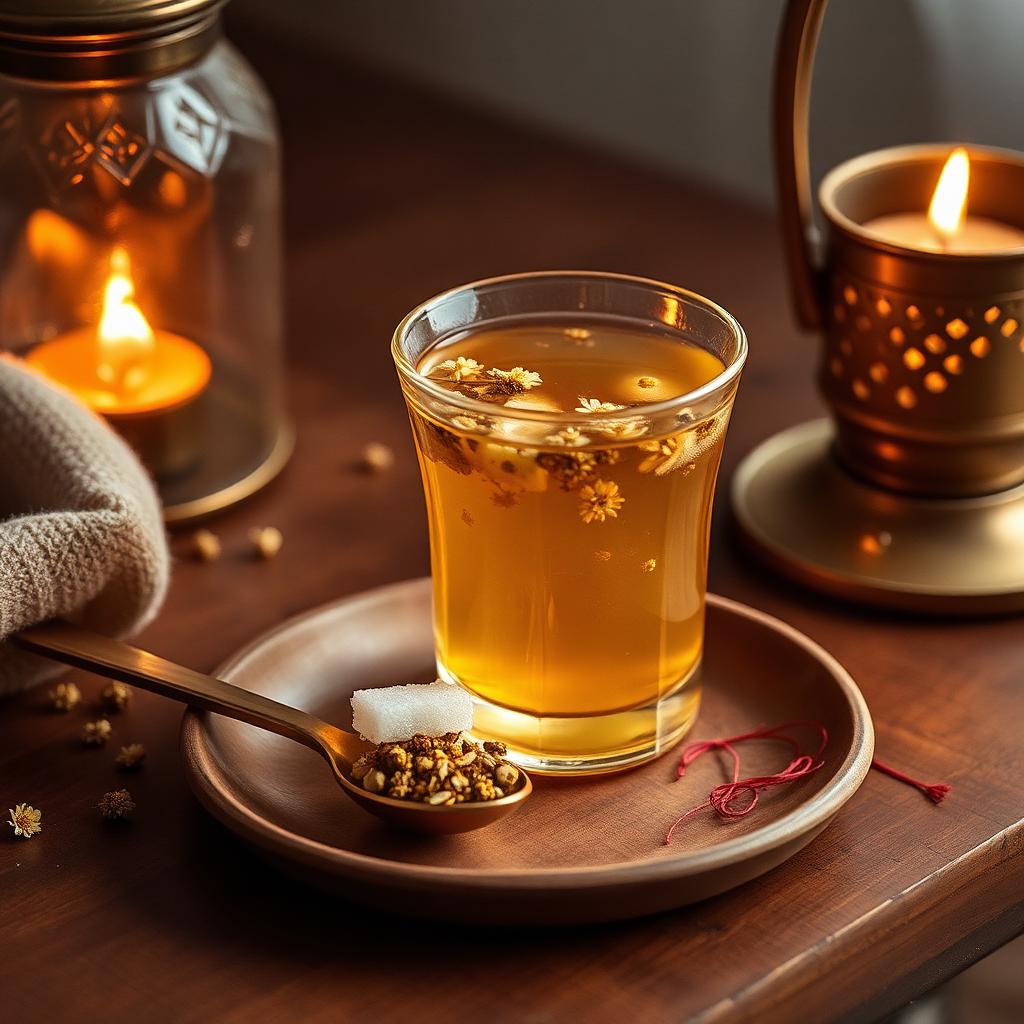
Rock sugar, the traditional sweetener for babuneh. It dissolves slowly, so the cup stays a ritual instead of a quick drink.
Pairing:
Dates
One date beside the cup 30 minutes before bed steadies blood sugar during the night.
Chapter 14 of 16
Through the Year
Spring:
Spring
For the first warm evenings, blend chamomile with dried rose petals and a thread of saffron. The cup feels light but still settles the evening.
Summer:
Summer
Cool leftover tea for a compress on sun-warmed eyes or skin. If you drink it, keep the cup light and save it for evening.
Autumn:
Autumn
Go back to the classical Persian pairing with linden as the nights get longer and sleep gets harder to settle into.
Winter:
Winter
When winter nights disrupt sleep, have a cup after dinner with a piece of nabāt and a slice of dried lemon.
Chapter 15 of 16
Sources
Chamomile (Matricaria recutita): An herbal medicine of the past with a bright future — Molecular Medicine Reports (NIH PMC). https://www.ncbi.nlm.nih.gov/pmc/articles/PMC2995283/
Chamomile — NIH NCCIH Health Information — US NIH NCCIH. https://www.nccih.nih.gov/health/chamomile
Apigenin and GABA receptor binding: neuropharmacology — European Journal of Pharmacology (PubMed). https://pubmed.ncbi.nlm.nih.gov/7588041/.
Chamomile — NCCIH — US NIH National Center for Complementary and Integrative Health. https://www.nccih.nih.gov/health/chamomile
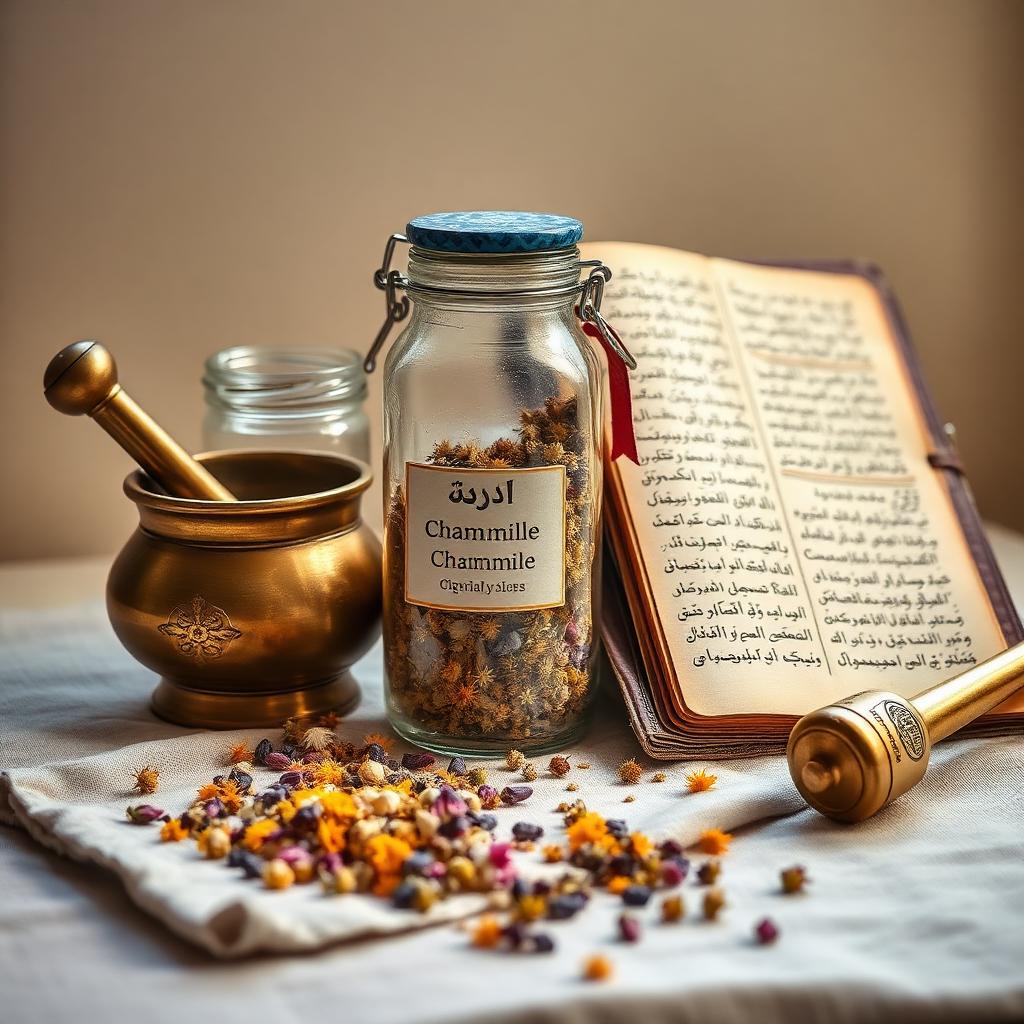
Sad Giah Hezar Darman (صد گیاه و هزار درمان) — One Hundred Plants and One Thousand Remedies — Dr. Hossein Erfani, 4th edition (1375 / 1996–1997). Primary traditional Persian herbal reference cited throughout this platform. Presented as traditional knowledge, not as modern medical proof.
Chapter 16 of 16
Sources (continued)
Office of Dietary Supplements: fact Sheets — US National Institutes of Health (NIH). https://ods.od.nih.gov/factsheets/list-all/.
Herbal Database: memorial Sloan Kettering Cancer Center. https://www.mskcc.org/cancer-care/diagnosis-treatment/symptom-management/integrative-medicine/herbs.
Herbs at a Glance: uS NIH National Center for Complementary and Integrative Health (NCCIH). https://www.nccih.nih.gov/health/herbsataglance.
FoodData Central: searchable nutrient database — US Department of Agriculture (USDA). https://fdc.nal.usda.gov/.
The Nutrition Source: harvard T.H. Chan School of Public Health. https://www.hsph.harvard.edu/nutritionsource/.
PubMed — peer-reviewed biomedical literature — US National Library of Medicine. https://pubmed.ncbi.nlm.nih.gov/