Cook them and eat them with fat. Raw and dry, you absorb a small fraction of the carotene.
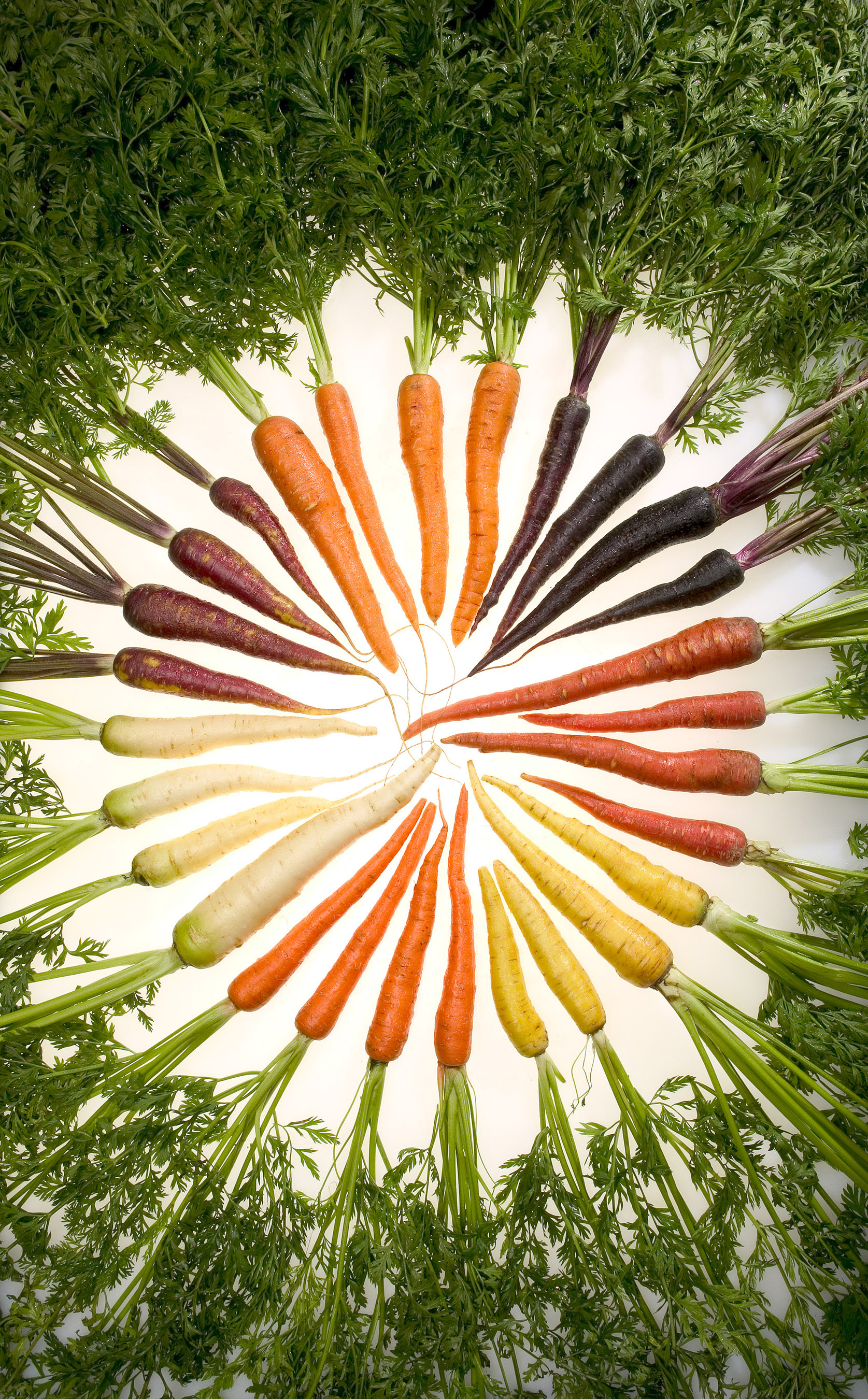
The orange carrot is recent. The old Persian and Central Asian carrots were purple and yellow.
Carrots don't give you better than normal eyesight. They prevent the deficiency that damages it.
Carrots are mostly water, sugar and fibre, with plenty of beta-carotene that your body turns into vitamin A as it needs it. Here's the useful part: heat breaks open the cell walls, and fat helps carry the carotene across the gut wall. That's why cooking carrots with a little fat makes such a difference. Across Iran, the same root becomes a raw snack, a fresh juice, or a slow-cooked halva with saffron and cardamom.
Known to botanists as Daucus carota subsp. sativus.
Chapter 2 of 14
Why It Matters
Vitamin A deficiency is still one of the world's most common nutritional problems, and carrots help address it for very little money. They also bring fibre and potassium in a form many children will happily eat. Because they keep for weeks in the fridge, they work especially well in real everyday diets.
Carrots bring two carotenoids (the orange and yellow plant pigments your body can use) that become especially useful with age. Beta-carotene supports the tissue of the eye and skin. Lutein (a yellow pigment linked to eye health) collects in the macula, where thinning drives much of the vision loss after seventy. Long studies that follow large groups also link higher carotenoid intake to lower heart and blood-vessel risk, and cooked carrot stays soft enough for anyone who finds chewing difficult.
One medium carrot covers roughly the full daily requirement for vitamin A, delivered as beta-carotene.
Cooking with fat raises carotene absorption several times over compared with raw and plain.
About 3.5 g of fibre in a cooked cup, much of it the soluble kind that binds bile acids.
Chapter 3 of 14
What It Contains
Primary compounds
Beta-carotene is the orange pigment and the source of the vitamin A, converted in the gut wall as needed.
Alpha-carotene sits alongside it and shows up in some of the strongest cohort associations.
Lutein (a yellow pigment linked to eye health) collects in the macula of the eye, which is the part of the vision story that holds up.
Falcarinol, a compound studied in laboratory models, is one reason interest in carrot goes beyond vitamin A.
Vitamins
Vitamin K, Vitamin C, Biotin
Other notable constituents
Minerals: Potassium, Manganese · Antioxidants: Anthocyanins (the natural colour pigments that make fruit red, purple or blue), in purple varieties
Fiber: About 3.5 g per cooked cup
Chapter 4 of 14
What Studies in People Show
Strong evidence
Cooking with added fat substantially increased carotenoid (the orange and yellow plant pigments your body can use) absorption from vegetables in controlled feeding studies.Strong evidence
High-dose beta-carotene supplements increased lung cancer incidence in smokers, an effect not seen with dietary carotene.Strong evidence
Moderate evidence
Higher carrot intake was associated with lower heart and blood vessel disease risk in a long-running cohort study (a study that follows a group of people over time).Moderate evidence
Chapter 5 of 14
Preparation and Kitchen Use
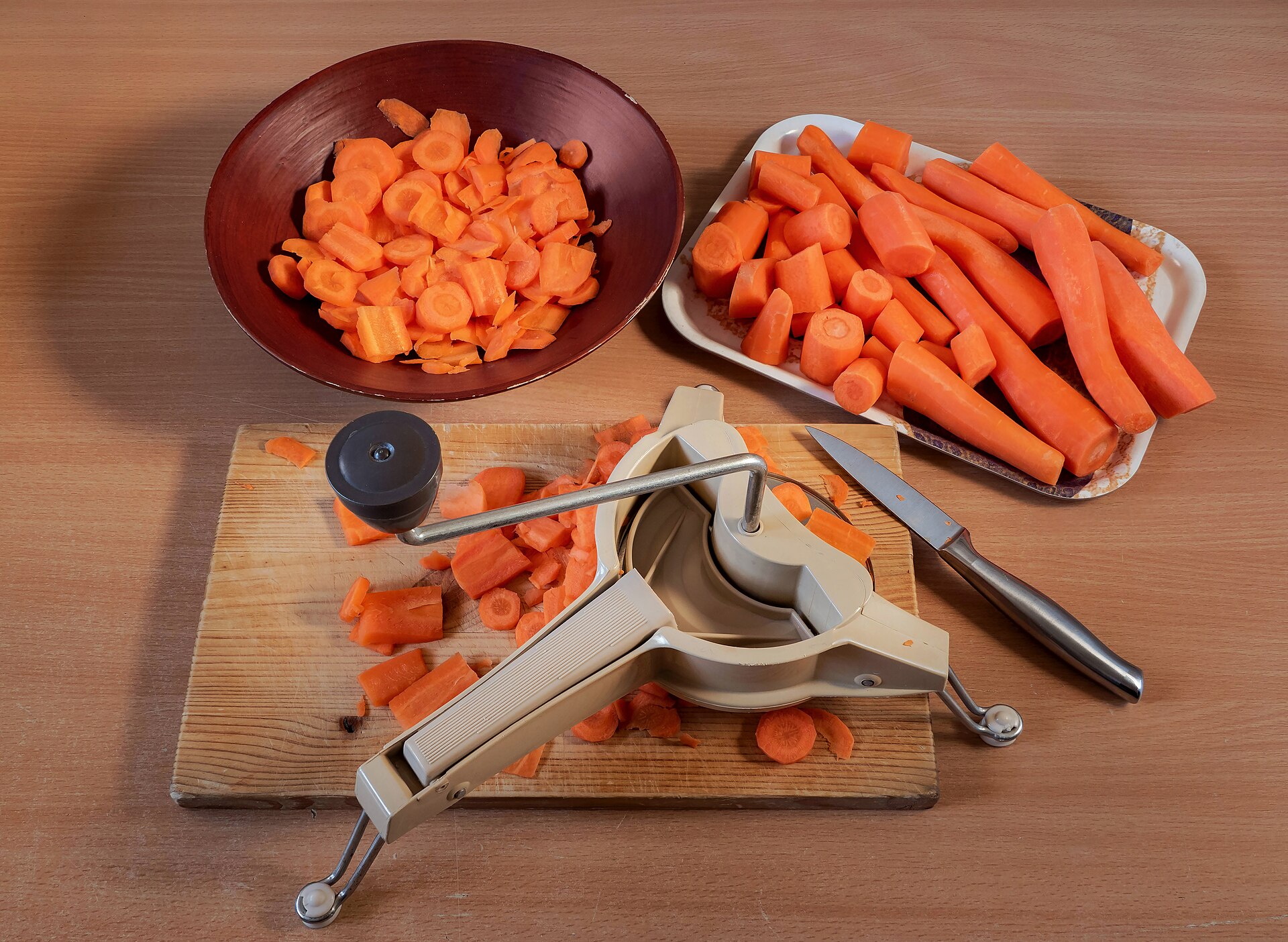
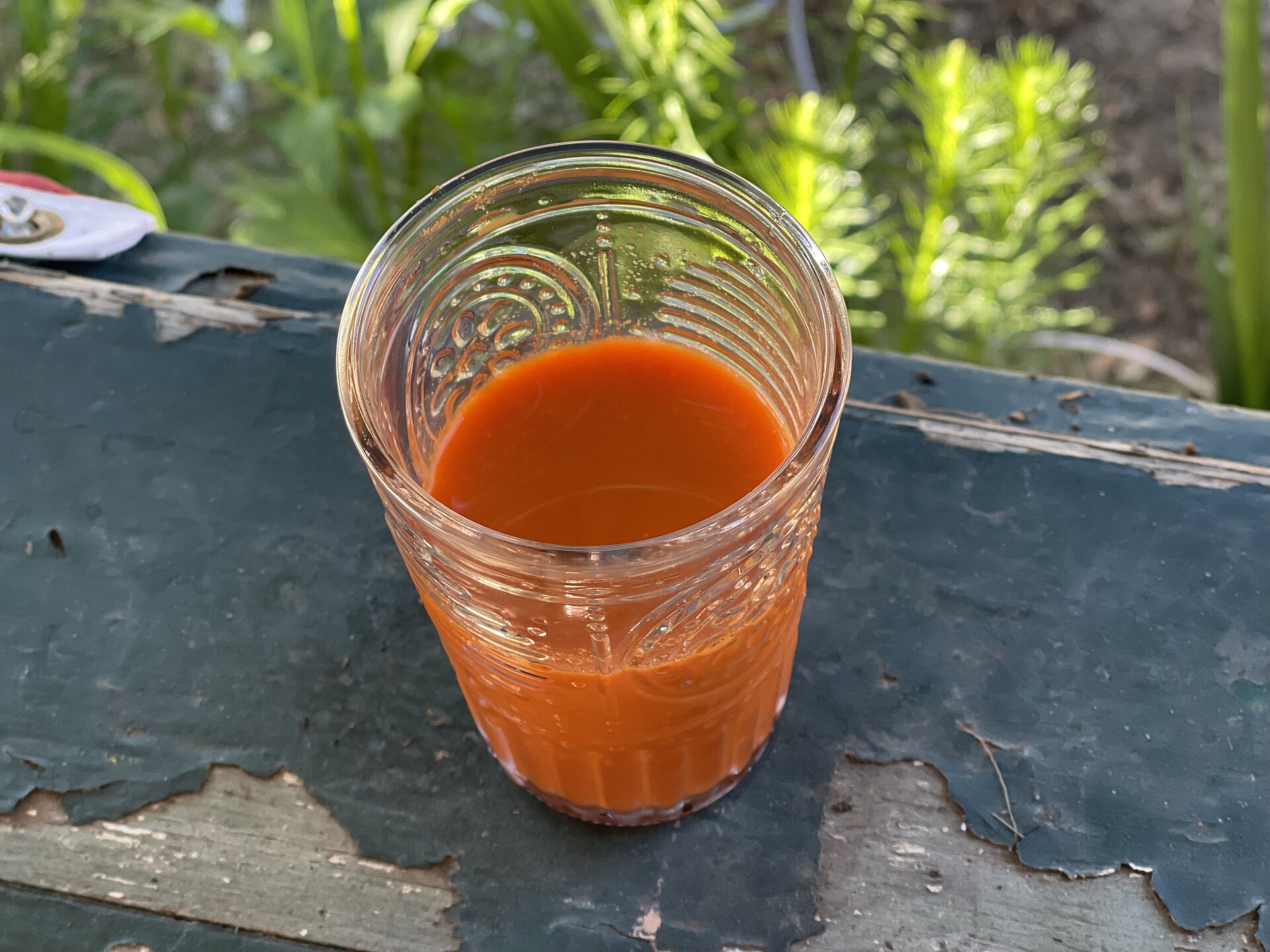
In the kitchen: one or two carrots most days, cooked with some fat on the plate. Pressed fresh into ab-havij, usually with a scoop of ice cream on top. Cooked down slowly with saffron and cardamom into halva-ye havij. Layered under rice with chicken and pistachio in havij polo. Grated into syrup as morabba-ye havij for the breakfast table.
Try cooking carrots whole, then cutting them afterwards. With less surface area exposed, less sugar leaches into the water.
Add oil, butter or yogurt to a carrot dish. Without some fat, most of the carotene passes straight through.
Cut off the leafy tops before storing them. The leaves pull moisture from the root and make it limp.
When you want gentle sweetness without sugar, grate carrots into rice, soup or dough.
Chapter 6 of 14
Medicines and Interactions
General cautions
Medication interaction:
Beta-carotene from food is safe. High-dose beta-carotene supplements raised lung cancer risk in smokers in two large trials, which is an argument about pills rather than vegetables.
Specific medicines
Medication interaction:
Warfarin — Carrots carry some vitamin K, less than leafy greens. Large daily amounts are worth keeping steady rather than avoiding. (low concern)
Medication interaction:
Orlistat and other fat-blockers — These reduce absorption of fat-soluble nutrients, including beta-carotene. Spread carotene-rich food across the day and mention it to your prescriber. (low concern)
Chapter 7 of 14
Who Should Be Careful
General caution:
Heavy daily juice drinking can turn the palms and the soles faintly orange. This is carotenemia, it's harmless, and it fades within weeks of cutting back.
General caution:
Juice removes the fibre and concentrates the sugar. Anyone watching blood sugar should eat the root and treat the juice as an occasional drink.
Allergy:
Known Apiaceae (carrot family) allergy.
Chapter 8 of 14
Pregnancy, Children and Older Adults
General
Children:
Whole raw carrot is a choking risk for young children. Grate it or cook it soft until about four.
Pregnancy and breastfeeding
Pregnancy and breastfeeding:
Safe and useful. Beta-carotene from food is converted only as the body needs it, so it doesn't carry the risk that high-dose retinol supplements do in pregnancy. Wash raw carrots well and peel them if the skin is rough.
Children
Children:
One of the first vegetables most babies meet, cooked soft and mashed from around six months. Whole raw carrot and thick coins are a choking risk under four, so grate or cook until then.
Older adults
Older adults:
Soft when cooked, easy to chew, and one of the cheapest ways to keep carotenoid (the orange and yellow plant pigments your body can use) intake up when appetite falls. Serve it with oil or butter, since the fat is what makes the nutrient available at all.
Chapter 9 of 14
Traditional Persian Perspective
Persian temperament: Warm & Moist (1st degree). Nourishing and gently loosening. Given for the eyes, for low mood, and to people recovering from long illness.
Persian medicine describes havij as warm and moist. People used it to brighten the eyes, lift a low mood, loosen a slow gut, and nourish someone recovering from illness. The old texts treat carrot seed separately from the root, describing the seed as warming and diuretic (makes you pass more urine). Traditional practice still keeps that distinction today.
Domesticated in the region of Afghanistan and the Iranian plateau, originally purple and yellow rather than orange.
Cooked into halva and preserves as a way to carry the winter crop through to spring.
Chapter 10 of 14
What It Goes With
§ More Pairings
Pairing:
Olive oil
Fat isn't optional here. Without it most of the carotene leaves your body unabsorbed.
Spice:
Cardamom
The classical partner in halva-ye havij, and it cuts the flat sweetness of a cooked root.
Spice:
Saffron
Colour on colour. In halva and in havij polo, saffron is what turns a vegetable into a dish worth serving guests.
Dairy:
Yogurt
Grated raw carrot in thick yogurt gives you the fat you need and makes a salad in two minutes.
Chapter 11 of 14
Through the Year
Spring:
Spring
Young thin carrots need almost nothing. Roast them whole with oil and cumin.
Summer:
Summer
Juice season. This is when ab-havij bastani makes sense and every juice bar in Tehran runs one.
Autumn:
Autumn
Main crop. Buy heavy, firm roots and store them cold with the tops cut off.
Winter:
Winter
Halva season. Grated carrot cooked slowly with saffron and cardamom until it holds a spoon.
Chapter 12 of 14
Questions People Ask
Do carrots really improve eyesight?
They prevent the vision loss that comes with vitamin A deficiency, which is a real and serious thing. They don't sharpen normal sight. The wartime story about night-flying pilots was propaganda covering up radar.
Is carrot juice as good as eating them?
For carotene, yes, if you drink it with something fatty. For everything else, no, because juicing throws away the fibre and leaves concentrated sugar.
Why did my skin go orange?
Carotenemia, from a lot of carrot or squash over weeks. It's harmless, it shows up first on the palms and the soles, and it fades when you cut back.
Are purple carrots better?
They carry anthocyanins (the natural colour pigments that make fruit red, purple or blue) on top of the carotene, so a mixed bunch gives you a wider range of pigments. Orange still wins on vitamin A.
Chapter 13 of 14
Sources
Sad Giah Hezar Darman (صد گیاه و هزار درمان) — One Hundred Plants and One Thousand Remedies — Dr. Hossein Erfani, 4th edition (1375 / 1996–1997). Primary traditional Persian herbal reference cited throughout this platform. Presented as traditional knowledge, not as modern medical proof.
Office of Dietary Supplements: fact Sheets — US National Institutes of Health (NIH). https://ods.od.nih.gov/factsheets/list-all/.
Herbal Database: memorial Sloan Kettering Cancer Center. https://www.mskcc.org/cancer-care/diagnosis-treatment/symptom-management/integrative-medicine/herbs.
Herbs at a Glance: uS NIH National Center for Complementary and Integrative Health (NCCIH). https://www.nccih.nih.gov/health/herbsataglance.
FoodData Central: searchable nutrient database — US Department of Agriculture (USDA). https://fdc.nal.usda.gov/.
Chapter 14 of 14
Sources (continued)
The Nutrition Source: harvard T.H. Chan School of Public Health. https://www.hsph.harvard.edu/nutritionsource/.
PubMed — peer-reviewed biomedical literature — US National Library of Medicine. https://pubmed.ncbi.nlm.nih.gov/