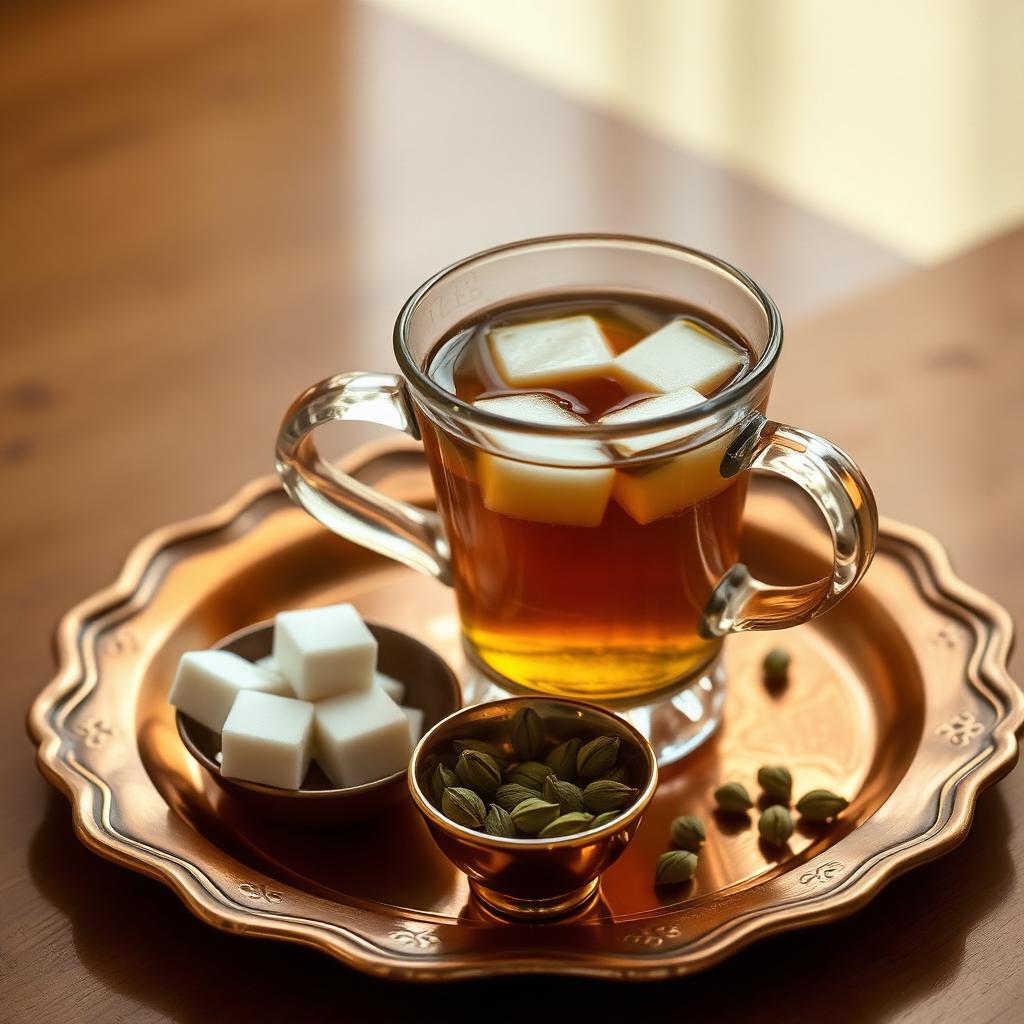
If you've ever finished a meal with cardamom tea, you'll know why cardamom is the everyday Persian after-meal lifter. Chai-ye hel (Persian cardamom tea) covers both jobs at once — the digestion and the mood.
Use the green pod (Elettaria) for Persian and Ayurvedic remedies, not the smoky black pod (Amomum).
Two to four crushed pods a day is a comfortable culinary range, and they're best crushed just before use. The aroma collapses within hours of grinding.
Chapter 2 of 20
Cardamom: What It Is and Which Part Is Used
Cardamom comes from the Western Ghats of India and is still one of the world's most prized spices. In Persian kitchens, its sweet fragrance belongs in tea and desserts. That warm-cool aromatic character is also why people have long used it after food, both to settle digestion and lift the mood. Can cardamom help digestion?
The digestive reputation is real but rests mainly on tradition: Avicenna recommended cardamom for a weak stomach and heaviness after meat, and it remains the everyday Persian after-meal aromatic for bloating and post-meal heaviness.
What It Is and Which Part Is Used: A Little More Background
Modern human trials of cardamom have focused on blood pressure, blood sugar, and inflammation markers — not digestion — so there's no modern evidence label for the digestive use, and cardamom isn't a treatment for IBS, reflux (stomach acid rising into the throat), ulcers, or any other condition. As a culinary habit it's very safe. Persistent or severe digestive symptoms deserve a clinician.
Known to botanists as Elettaria cardamomum.
Chapter 3 of 20
Why Herbalists Still Reach for It
For centuries, Persian households have returned to one small habit for post-meal heaviness and dull afternoons: black tea scented with two crushed pods. Cardamom brings digestion, mood, and heart and blood vessel ease together in one simple daily gesture.
After 50, small daily shifts in insulin sensitivity, blood pressure, and inflammation can add up over time. Small randomized trials in overweight, prediabetic, and hypertensive (having high blood pressure) adults suggest that 3 g/day of green cardamom may move one of these markers in a helpful direction. A systematic review (a careful summary of all the studies on a question) of eight blood-pressure trials found a modest but consistent effect. None of this replaces medicine. Cardamom is simply an inexpensive culinary habit that fits easily into the Persian tea ritual many families already enjoy.
Cardamom eases bloating and post-meal heaviness, and it freshens the breath. Those two effects made it a table spice as much as a remedy.
Chapter 4 of 20
The Plant Itself
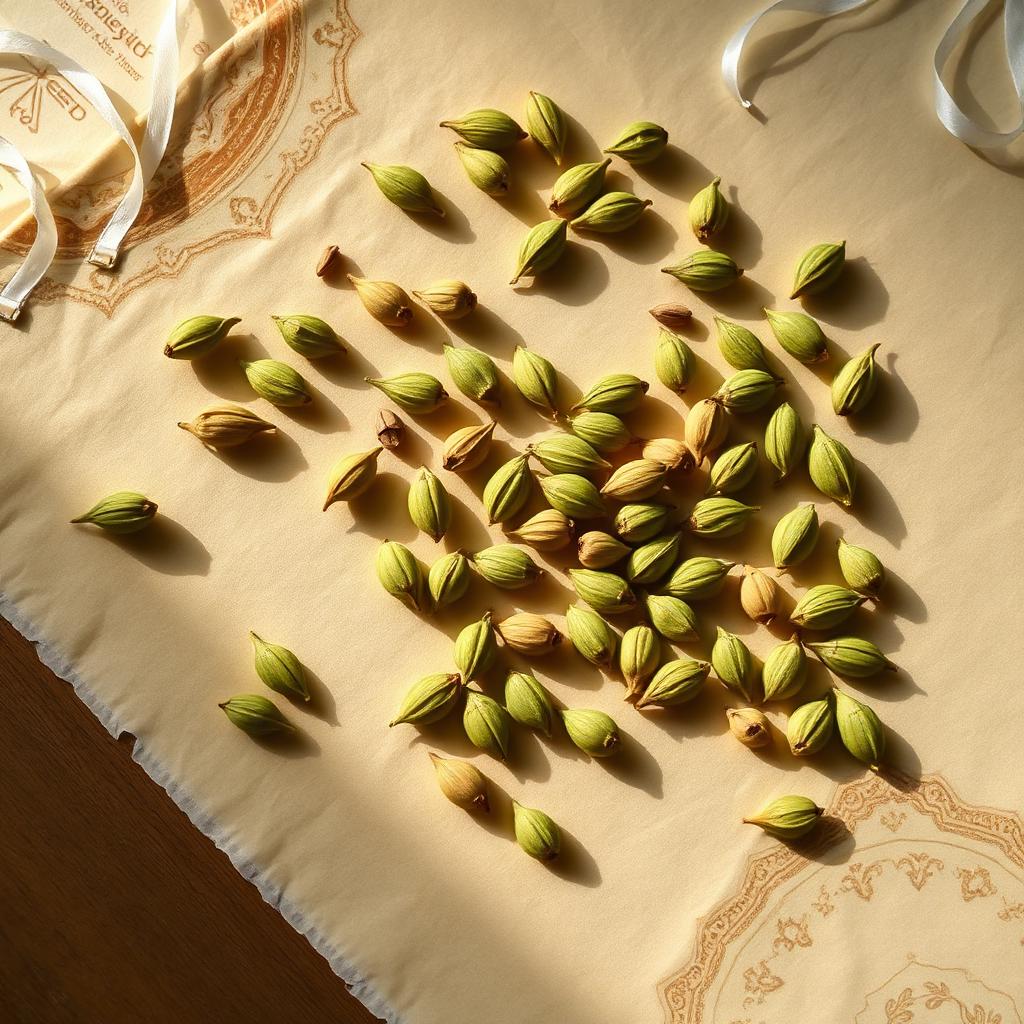
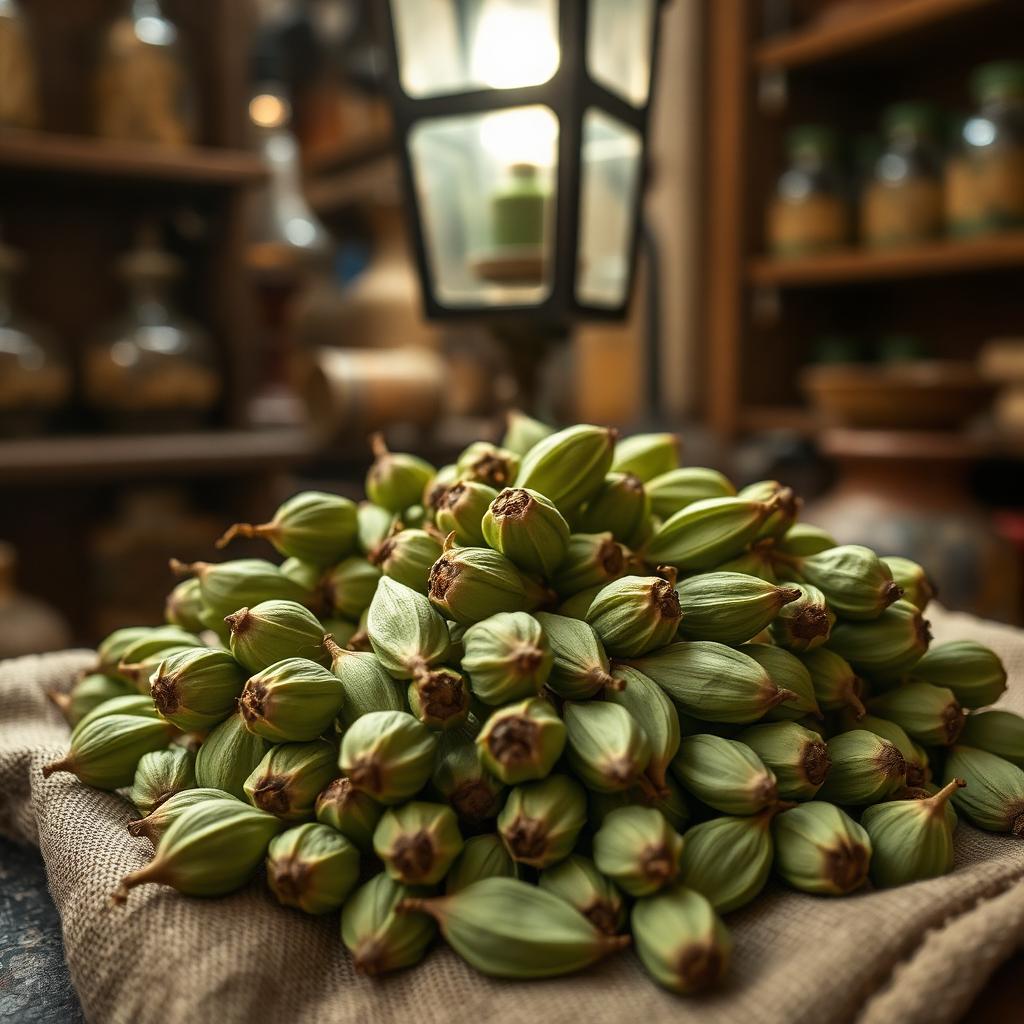
A tropical perennial 2–4 m tall with long lance-shaped leaves rising from underground rhizomes (underground stems that spread and grow new shoots). The medicinal part is the dried three-sided fruit pod (about 1–2 cm long) containing 15–20 small dark seeds rich in essential oil (the concentrated aromatic oil of the plant), including 1,8-cineole, α-terpinyl acetate, and limonene.
Family: Zingiberaceae (ginger family).
Chapter 5 of 20
What Is In It
Primary compounds
1,8-cineole (eucalyptol) — the primary aromatic. Carminative (traditionally used to settle gas and bloating) and mildly bronchodilator (something that helps open the airways).
α-terpinyl acetate is the sweet, floral top note. Mild spasmolytic (something that relaxes muscle spasms) on gut smooth muscle.
Limonene: antioxidant citrus terpene (a type of natural plant compound that gives many herbs their scent and effects) shared with the peels of oranges and lemons.
Sabinene, linalool, myrcene — supporting terpenes with mild antimicrobial (slows the growth of germs) and calming activity.
Other notable constituents
Minerals: Manganese, Iron, Magnesium
Chapter 6 of 20
In the Laboratory
From laboratory work, not from people taking it
It's traditionally regarded as uplifting for mood, and its essential oils carry antioxidant activity.
Cardamom essential oil (1,8-cineole, α-terpinyl acetate, limonene) shows dose-dependent antimicrobial (slows the growth of germs) activity in vitro (in laboratory dishes, not in people) against dental-caries (tooth decay) and periodontal (gum) bacteria (e.g., Streptococcus mutans, Porphyromonas gingivalis) — a plausible mechanism for its long-standing breath-freshening use, though no clinical trial has yet measured halitosis outcomes directly. Rated: early research.
Chapter 7 of 20
What Studies in People Show
What studies in people show
In overweight and prediabetic adults (n=80), 3 g/day of green cardamom powder for 8 weeks improved fasting insulin and reduced hs-CRP (a blood test marker of inflammation) versus placebo.Emerging evidence
In patients with type 2 diabetes (n=83), 3 g/day of cardamom for 10 weeks improved HbA1c (a blood test showing average blood sugar over about three months) and insulin sensitivity compared with placebo.Emerging evidence
Systematic review and meta-analysis (a study that pools the results of many trials) of 10 randomised trials (n=534) found cardamom supplementation modestly lowered systolic and diastolic blood pressure (the lower number, measured between heartbeats) in adults with metabolic syndrome or hypertension.Emerging evidence
Chapter 8 of 20
How It Is Prepared
After lunch as chai-ye hel to lift the heavy afternoon. And thirty minutes before bed as saffron-cardamom milk on cold evenings. Two moments, both quietly medicinal.
The classic is chai-ye hel: two green pods crushed into a teapot of black tea. For something lighter, steep three crushed pods in hot water for five minutes. Simplest of all, bite one whole pod and chew the seeds for thirty seconds after eating.
Other Ways to Use It
Ground, it perfumes saffron rice pudding, halva and rosewater desserts.
Crush two green pods into a teapot of black tea after lunch. Ground, a pinch goes into oatmeal or rice pudding, or into coffee grounds before brewing.
Chew one pod slowly after a garlic-heavy meal or a coffee. For an evening nightcap, simmer three pods with milk and a saffron thread.
Chapter 9 of 20
Medicines and Interactions
Medication interaction:
Antiplatelets (medicines that stop blood cells sticking together, such as aspirin and clopidogrel) & anticoagulants (blood-thinning medicines such as warfarin) — Cardamom extracts show mild antiplatelet activity in vitro, meaning in lab tests rather than in people. Use in food is safe, but extract-level dosing can theoretically add to bleeding risk. (low concern)
Medication interaction:
Antihypertensives (blood-pressure medicines), including ACE inhibitors, ARBs and diuretics (water tablets) — 3 g/day of cardamom modestly lowers blood pressure in trials. That is a welcome effect for most, but monitor if you already run low. (low concern)
Medication interaction:
Antidiabetic medicine (insulin, sulfonylureas) — Small trials show improved insulin sensitivity. Watch for gentle additive lowering of fasting glucose at 3 g/day. (low concern)
Medication interaction:
Calcium-channel blockers (a type of blood-pressure medicine) that are broken down by CYP3A4, a liver enzyme that clears many medicines — Preclinical data suggest cardamom essential oil may weakly block CYP3A4 at high extract doses. Normal food amounts aren't a concern. (low concern)
Chapter 10 of 20
Who Should Be Careful
General caution:
Generally very safe in normal food amounts.
Medication interaction:
Gallstone caution at very high doses.
General caution:
Seek medical care for severe or worsening upper abdominal pain, jaundice (yellowing of the skin or eyes), unexplained weight loss, black or bloody stools, or vomiting blood — these are red flags that a spice can't address and require prompt evaluation.
Medication interaction:
Avoid medicinal doses with gallstones — cardamom is mildly cholagogue (something that increases bile flow).
Allergy:
Rare allergy in Zingiberaceae-sensitive people.
Chapter 11 of 20
Pregnancy, Children and Older Adults
Pregnancy and breastfeeding
Pregnancy and breastfeeding:
Culinary cardamom in tea, rice, and sweets has been part of Persian pregnancy diets for centuries and is considered safe and gently digestive. Avoid concentrated cardamom essential oil or extract capsules during pregnancy and breastfeeding — the aromatic terpenes, the plant's fragrant oil compounds, have not been studied at supplement doses in pregnant women.
Children
Children:
A whole pod perfuming rice or milk is a lovely early flavor for children. Introduce ground cardamom in tiny pinches from around age 2 in oatmeal or rice pudding. Whole pods are a mild choking risk for children under 4 — remove before serving.
Older adults
Medication interaction:
One of the highest-leverage culinary additions after 60. The evening saffron-cardamom milk supports sleep and the daily cardamom tea supports blood pressure and blood-sugar ease — both classical Persian habits with modern trial backing. Coordinate with a clinician if on antihypertensive, anticoagulant (blood-thinning medicines), or diabetes medicine.
Chapter 12 of 20
What Persian Medicine Says
Persian temperament: Warm & Dry (2nd degree). Persian medicine reads cardamom as warm and dry, aromatic, and 'heart-gladdening'. It lifts heaviness from cold, damp stomachs and disperses the cool, foggy afternoon that follows a rich lunch.
Persian and Ayurvedic physicians both describe cardamom as warm and dry. That's why people add it to things that can feel heavy: black tea, rich rice, sweet halva (a dense, sweet confection made from sesame paste or flour), and strong coffee. The idea is to get a stalled stomach moving.
It has long suited people who feel bloated, queasy, or sluggish after a large meal, and it's seen as a safe daily habit rather than a course of treatment. Avicenna recommended it for a weak stomach and heaviness after meat. That same idea lives on whenever a Persian family cracks a pod into the teapot.
Chapter 13 of 20
What Persian Medicine Says: In the Household
Traditional use puts cardamom after the meal, for heaviness and slow digestion. It's also given for mild nausea, including motion sickness and morning queasiness.
A chewed pod is the standard answer to breath that lingers after garlic, onion or coffee. Tradition adds low spirits and afternoon mental fog to the list.
Crush a green cardamom pod and its scent immediately feels at home in Persian black tea, saffron rice, and rosewater desserts.
Chapter 14 of 20
Traditional Formulas
Chai-ye hel: Persian black tea perfumed with crushed green cardamom pods, which is the everyday after-meal digestive.
Joulab-e hel: classical 'heart-gladdening' decoction (a drink made by simmering the plant in water) of cardamom, rosewater, and honey for low spirits and nausea.
Sholeh-zard: saffron rice pudding perfumed with cardamom, rosewater, and cinnamon — Persian comfort food with a digestive purpose.
Chapter 15 of 20
What It Goes With
Spice:
Saffron
Saffron warms and lifts the heart, cardamom carries its aroma gently into the stomach. The classical Persian evening pair.
Spice:
Ginger
Cardamom lightens ginger's heavy edge. The two together make the Persian chai-masala backbone.
Rose:
Rose
Rose cools where cardamom warms — together they scent nabāt tea and soothe an anxious chest.
Chapter 16 of 20
What It Goes With: More Pairings
§ A Few More Pairings
Spice:
Cinnamon
Cardamom + cinnamon is the Persian sweet-spice pair for rice puddings, halva, and warming winter drinks.
Tea:
Black tea
Two crushed pods per pot. That makes it the everyday chai-ye hel that ends most Persian meals.
Grain:
Rice (basmati)
A whole pod tucked into the rice pot perfumes the grain and eases digestion of the finished plate.
Milk:
Milk
Warm milk with cardamom + saffron is the Persian nightcap — gentle on the gut, quieting for the mind.
Tea:
Coffee
A pinch ground into the grounds is the Bedouin and Persian way to soften coffee's heat and freshen the breath.
Chapter 17 of 20
Through the Year
Spring:
Spring
Add crushed pods to green tea and steamed rice as the body wakes up — cardamom eases the sluggish, damp digestion of early spring.
Summer:
Summer
A pinch of ground cardamom in rosewater sharbat or cold saffron milk lightens the sweetness and balances summer's cooling drinks with a gentle warmth.
Autumn:
Autumn
The classical after-lunch chai season — 2 crushed pods per pot of black tea to lift the heaviness of returning stews.
Winter:
Winter
Simmer 3 pods with warm milk and saffron for the Persian nightcap that eases cold hands, low spirits, and shallow sleep.
Chapter 18 of 20
Questions People Ask
How many pods is safe per day?
Two to four crushed pods spread across the day is a comfortable culinary range. Higher amounts taken as extracts can interact with antiplatelet (medicines that stop blood cells sticking together, such as aspirin) and blood-sugar medicines.
Why does cardamom freshen breath so well?
Its essential oils (cineole, limonene) are mildly antibacterial, and they neutralize the volatile sulfur compounds that garlic, onion, and mouth bacteria release.
Chapter 19 of 20
Sources
Sad Giah Hezar Darman (صد گیاه و هزار درمان) — One Hundred Plants and One Thousand Remedies — Dr. Hossein Erfani, 4th edition (1375 / 1996–1997). Primary traditional Persian herbal reference cited throughout this platform. Presented as traditional knowledge, not as modern medical proof.
Office of Dietary Supplements: fact Sheets — US National Institutes of Health (NIH). https://ods.od.nih.gov/factsheets/list-all/.
Herbal Database: memorial Sloan Kettering Cancer Center. https://www.mskcc.org/cancer-care/diagnosis-treatment/symptom-management/integrative-medicine/herbs.
Herbs at a Glance: uS NIH National Center for Complementary and Integrative Health (NCCIH). https://www.nccih.nih.gov/health/herbsataglance.
FoodData Central: searchable nutrient database — US Department of Agriculture (USDA). https://fdc.nal.usda.gov/.
Chapter 20 of 20
Sources (continued)
The Nutrition Source: harvard T.H. Chan School of Public Health. https://www.hsph.harvard.edu/nutritionsource/.
PubMed — peer-reviewed biomedical literature — US National Library of Medicine. https://pubmed.ncbi.nlm.nih.gov/