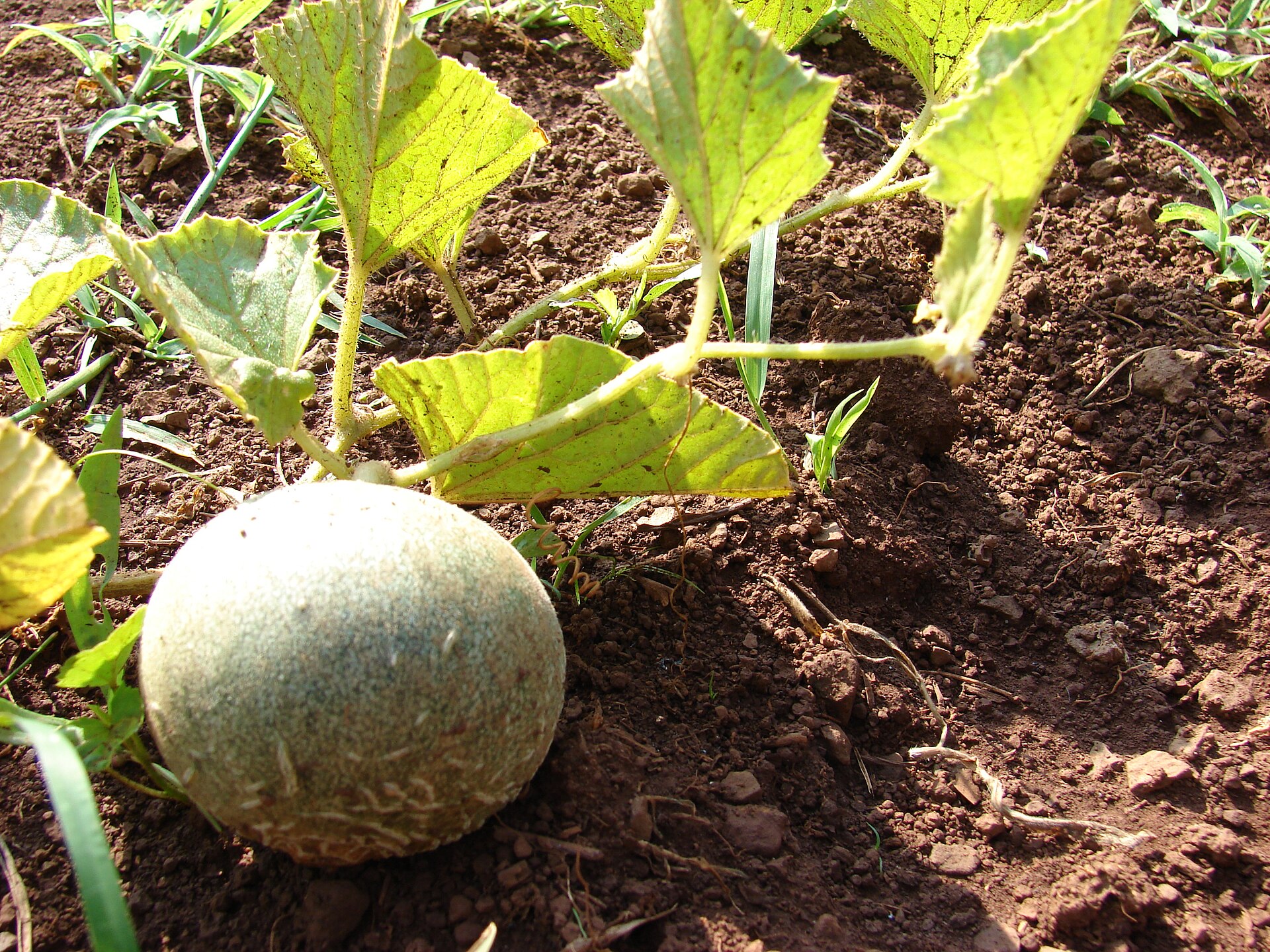
One cup covers a full day of vitamin A, from beta-carotene in the orange flesh.
It's about 90% water, so it hydrates while you eat it.
Smell the stem end. A ripe tālebi announces itself. An unripe one smells of nothing.
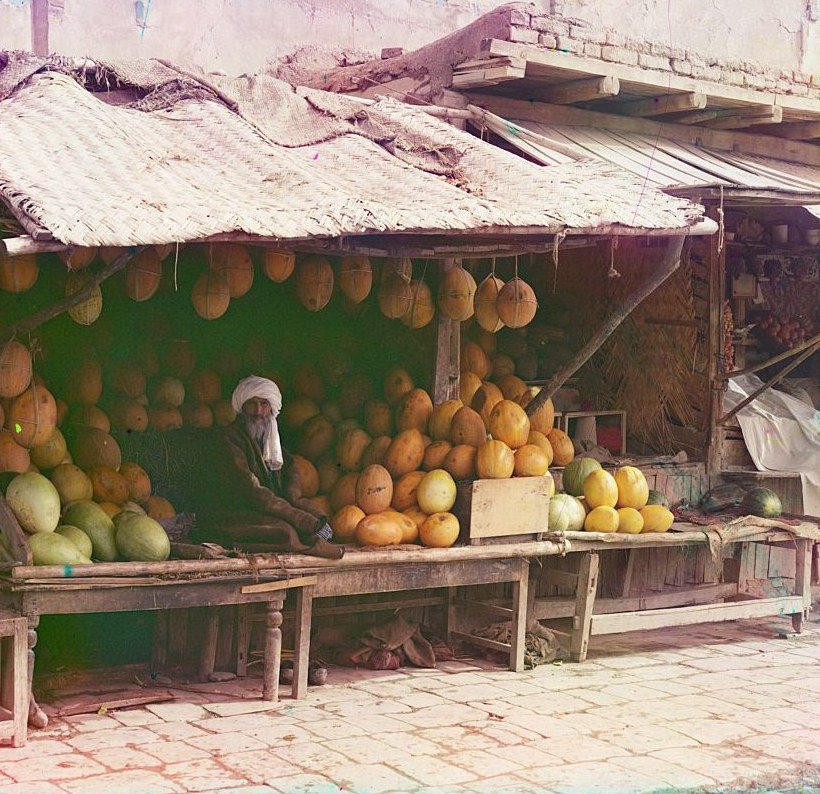
Melons have been a Persian speciality for a thousand years. Ibn Sīnā gave kharbozeh a section of its own in the Canon, and Silk Road travellers wrote home about the melon stalls of Samarkand and Khorasan. Tālebi is the small, orange-fleshed melon that fills Tehran markets from Khordad onward. You can smell a ripe one across the room. It's mostly water, and its deep orange colour comes from the pigment your body turns into vitamin A.
Known to botanists as Cucumis melo var. cantalupensis.
Chapter 2 of 15
Why It Matters
Vitamin A, water and folate don't often come together in something people genuinely enjoy eating. During a Persian summer, appetite can fade and thirst may be unreliable. A cold wedge can be more inviting to an older person than a glass of water they won't finish.
Thirst can fade with age, and mild dehydration may show up as tiredness or confusion before anyone thinks to offer water. Cold fruit often gets eaten when a glass of water doesn't. Tālebi also provides the vitamin A older eyes need most.
The orange pigment becomes vitamin A, which the eyes and the skin both need.
It replaces water and potassium lost through a day of sweating.
It moves urine gently, which is why the old texts reached for it in the hot months.
Chapter 3 of 15
What It Contains
Primary compounds
Beta-carotene is the orange pigment. The body converts it to vitamin A as it needs it, so it doesn't build up the way a supplement can.
Alpha-carotene sits alongside it in smaller amounts.
Potassium and magnesium replace what sweating takes out.
Folate is unusual in fruit and is the reason this melon is recommended in pregnancy.
Other notable constituents
Fiber: About 1.4 g per cup
Chapter 4 of 15
What Studies in People Show
What studies in people show
Higher dietary beta-carotene intake is linked to lower risk of age-related eye disease.Moderate evidence
Cut melon has been repeatedly identified as a vehicle in listeria and salmonella outbreaks, traced to the rind surface.Strong evidence
Chapter 5 of 15
Preparation and Kitchen Use
In the kitchen: late morning or early afternoon in high summer, chilled, before other food. Scrub the rind under running water before you cut it. Halve, scoop the seeds, then cut into wedges.
Chill for two hours. Warm melon tastes flat.
Blended with lime and a little rose water into a sharbat.
Serve chilled wedges before lunch on a hot day.
Eat it with feta and warm bread as a light summer meal.
Cubed and frozen for the hottest part of the afternoon.
Chapter 6 of 15
Medicines and Interactions
Medication interaction:
Potassium-sparing diuretics (spironolactone, amiloride) — Large daily amounts add potassium on top of a drug that already holds it in. (moderate concern)
General caution:
ACE inhibitors and ARBs — These raise potassium too. Heavy melon eating adds to it. (moderate concern)
Chapter 7 of 15
Who Should Be Careful
General caution:
Fluid-restricted kidney or heart failure.
General caution:
Advanced kidney disease with potassium limits.
General caution:
Cut melon is one of the more common sources of listeria and salmonella, because the bacteria live on the rind and the knife carries them in. Scrub the rind, then refrigerate anything you have cut.
General caution:
Persian practice says melon alone or before food. Eaten on top of a heavy meal it causes bloating in a lot of people.
General caution:
It is sweet. A couple of wedges is a serving; half a melon isn't.
Chapter 8 of 15
Pregnancy, Children and Older Adults
Pregnancy and breastfeeding
Pregnancy and breastfeeding:
A useful pregnancy fruit for the folate and the fluid, and it stays down in early nausea when little else does. The one real rule is hygiene: scrub the rind before cutting and keep cut melon in the fridge, because listeria travels from skin to flesh on the knife.
Children
Children:
Children eat it happily through the summer. Cut it small for toddlers and take the seeds out. Keep the portion modest if a child is prone to loose stools.
Older adults
Older adults:
Soft, cold, sweet and needing no chewing, so it gets eaten when other food is refused. That makes it one of the simplest ways to keep an older person hydrated in a heat wave. Ask a clinician first if there's kidney disease or a fluid limit.
Chapter 9 of 15
Traditional Persian Perspective
Persian temperament: Cool & Moist (2nd degree). Cooling, hydrating, gently diuretic (makes you pass more urine). Best before a meal rather than after, and balanced by salt or a warm spice for cold constitutions.
Persian medicine sees tālebi as cool and moist in the second degree. It was used to cool and hydrate the body, move urine gently, and clear heat from the stomach. Hakims were firm about timing: eat melon before food or on its own, never after a heavy dish, because they believed cold, wet fruit would sit badly on hot food and ferment.
Chapter 10 of 15
Traditional Persian Perspective: In the Household
Melons were packed in lead-lined boxes of ice and carried from Khorasan to the Abbasid court.
Hakims prescribed the flesh in fevers of the hot season to cool and to move urine.
The seeds were dried, salted and sold as a snack alongside pumpkin and watermelon seeds.
Tālebi with feta and bread makes a whole lunch in the heat. It's the kind of meal a Persian household serves when nobody can face cooking. The melon stalls of Khorasan and Samarkand were once so famous that melons were packed in ice and sent to caliphs in Baghdad.
Chapter 11 of 15
What It Goes With
Pairing:
Feta
Salt against sugar, and the fat slows the sugar rise. This is the Persian summer lunch.
Herb:
Mint
Fresh mint on cold melon settles a stomach that finds the fruit heavy.
Grain:
Barbari Bread
Bread turns a plate of melon and cheese into an actual meal.
Fruit:
Lime
A squeeze wakes up melon that turned out flatter than it smelled.
Chapter 12 of 15
Through the Year
Spring:
Spring
Too early. Spring melons are shipped, and they taste of the truck.
Summer:
Summer
The season, from Khordad to the end of Shahrivar. Keep one cut and chilled through a heat wave.
Autumn:
Autumn
Late melons keep well into autumn and are often the sweetest of the year.
Winter:
Winter
Out of season. Winter citrus does the same job better.
Chapter 13 of 15
Questions People Ask
How do I pick a ripe one?
Smell the stem end. Ripe tālebi is fragrant from a distance. Unripe fruit smells of nothing. It should also feel heavy and give slightly at the blossom end.
Why does Persian tradition say not to eat melon after a meal?
Cold, wet fruit landing on top of hot, heavy food sits badly and causes bloating. Hakims wrote it down centuries ago and most people who ignore it discover the same thing.
Can I eat the seeds?
Yes. Rinse, dry, salt and roast them at 160°C like pumpkin seeds. They were sold that way in the bazaar.
Is the sugar a problem for diabetes?
A cup has around 12 g of sugar with very little fibre to slow it. One or two wedges eaten with feta or nuts is manageable. A whole melon in one sitting isn't.
Chapter 14 of 15
Sources
Sad Giah Hezar Darman (صد گیاه و هزار درمان) — One Hundred Plants and One Thousand Remedies — Dr. Hossein Erfani, 4th edition (1375 / 1996–1997). Primary traditional Persian herbal reference cited throughout this platform. Presented as traditional knowledge, not as modern medical proof.
Office of Dietary Supplements: fact Sheets — US National Institutes of Health (NIH). https://ods.od.nih.gov/factsheets/list-all/.
Herbal Database: memorial Sloan Kettering Cancer Center. https://www.mskcc.org/cancer-care/diagnosis-treatment/symptom-management/integrative-medicine/herbs.
Herbs at a Glance: uS NIH National Center for Complementary and Integrative Health (NCCIH). https://www.nccih.nih.gov/health/herbsataglance.
FoodData Central: searchable nutrient database — US Department of Agriculture (USDA). https://fdc.nal.usda.gov/.
Chapter 15 of 15
Sources (continued)
The Nutrition Source: harvard T.H. Chan School of Public Health. https://www.hsph.harvard.edu/nutritionsource/.
PubMed — peer-reviewed biomedical literature — US National Library of Medicine. https://pubmed.ncbi.nlm.nih.gov/