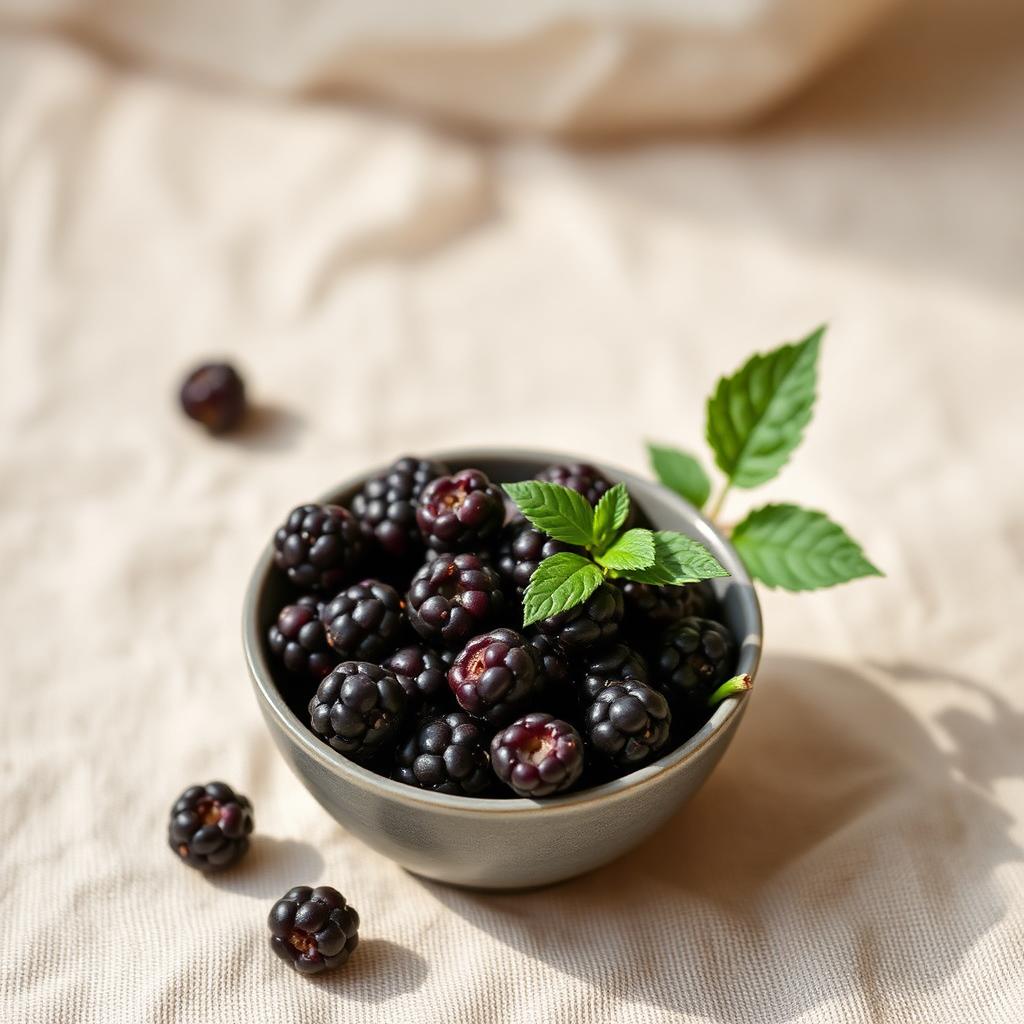
Blackberry, raspberry and loganberry crossed. Usually sold frozen or as jam. Dark colour, plenty of natural pigment.
It's a large, deep purple berry, and so soft that it bruises on the way to the shop.
Known to botanists as Rubus ursinus × Rubus idaeus.
Frozen fruit isn't second-best. Boysenberries get picked ripe and frozen within hours, so a freezer bag often beats tired fresh berries.
What Else to Know
You get high fibre, low sugar, and a strong dose of the dark-berry pigments that studies link to blood-vessel and brain health. Frozen is cheap and it keeps, and that matters more than any single nutrient.
Deep colour from anthocyanins (the natural colour pigments that make fruit red, purple or blue), the same family studied in blackberries.
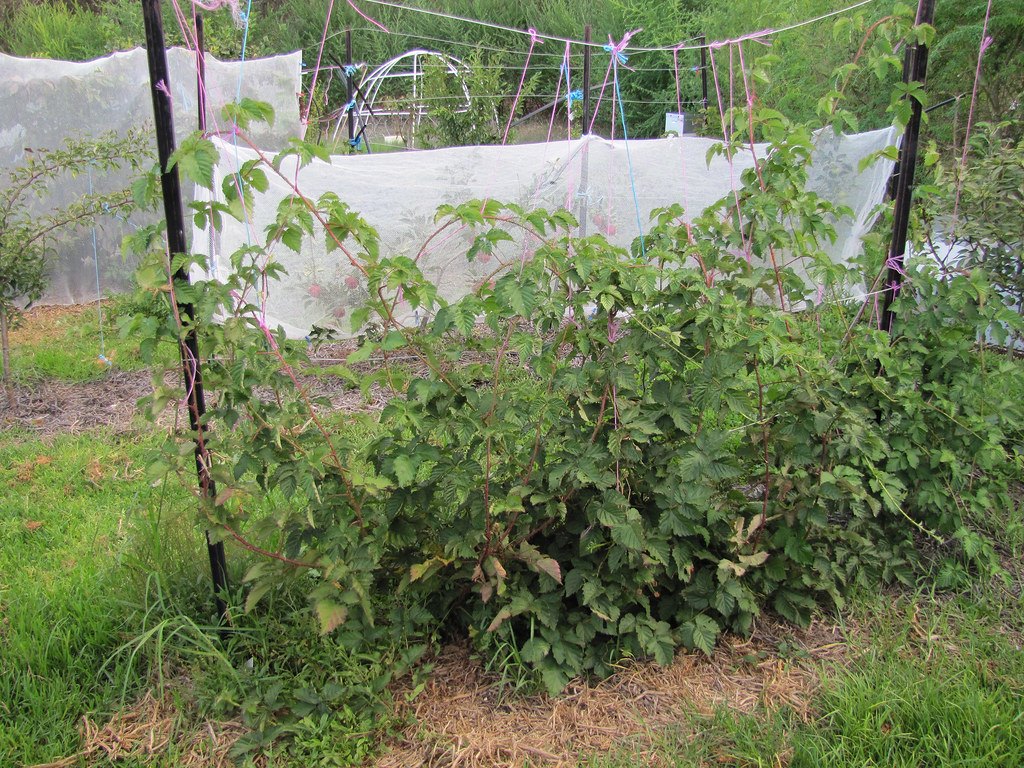
The plant is a thornless trailing cane, closer to a blackberry bush than a raspberry one. It fruits on canes grown the year before, which is why growers train the long stems along wires. The berry itself is large and wine-dark, and it comes away with its core still inside, the way a blackberry does.
Family: Rosaceae (rose family).
Primary compounds
Ellagic acid.
Other notable constituents
Minerals: Manganese, Potassium, Copper · Antioxidants: Quercetin (a plant compound found in onions, apples and tea)
Chapter 3 of 12
What Studies in People Show
What studies in people show
Rubus berries are a significant dietary source of anthocyanins (the natural colour pigments that make fruit red, purple or blue) and ellagitannins.Strong evidence
Berry-rich diets were associated with improved vascular (relating to the blood vessels) measures in pooled trial analyses.Emerging evidence
Chapter 4 of 12
Preparation and Kitchen Use
Don't wash frozen berries. They turn to mush.
Thaw in a bowl and keep the juice — it holds most of the colour.
Cook briefly. Long boiling flattens both flavour and colour.
In the kitchen: frozen berries stirred through yogurt or oats. Warmed into a loose sauce for cheese or rice pudding. Fresh, eaten within a day of picking, if you ever find them.
Use frozen, straight into yogurt or porridge.
Warm gently with a spoon of honey for a sauce.
Blend into a smoothie without thawing.
Chapter 5 of 12
Medicines and Interactions
Medication interaction:
Warfarin — Dark berries carry small amounts of vitamin K. A regular habit is easier to manage than an occasional large bowl. (low concern)
Medication interaction:
Blood-thinning medicine generally — No clinical reports involve boysenberry. Large daily supplement doses of berry extract are a different matter from fruit. (low concern)
Chapter 6 of 12
Who Should Be Careful
General caution:
The seeds are large and can bother people with diverticular disease flare-ups.
General caution:
The colour stains teeth briefly and fabric permanently.
General caution:
Commercial boysenberry jam and syrup are mostly sugar. The fruit's benefits don't carry over to the jam jar.
Chapter 7 of 12
Pregnancy, Children and Older Adults
Pregnancy and breastfeeding
Pregnancy and breastfeeding:
Ordinary fruit, useful folate, and easy to eat when other things aren't. Wash it well because it grows low and is picked soft.
Children
Children:
Soft enough for young children and sweet enough that they don't argue. Mash it for anyone under two, as with all whole berries.
Older adults
Older adults:
Soft fruit with real fibre and no chewing required, which makes it a genuinely good option where apples and pears have become hard work.
Chapter 8 of 12
How It Was Traditionally Used
Persian temperament: Cool & Moist (1st degree). Sweet, soft and juicy rather than sour. Read as cooling and moistening, suited to hot weather and dry constitutions.
Boysenberry is a modern fruit, so classical Persian medicine has nothing to say about it. Persian practice reads soft dark berries in general as cooling and gently moistening, and boysenberry sits naturally in that group — but that's a reading by family.
In the Household
No classical tradition of its own — it's a twentieth-century berry.
It's named after Rudolph Boysen, who bred it, and it was saved from being lost by Walter Knott, who grew it in California and sold the jam. These days New Zealand grows most of the world's crop.
Chapter 9 of 12
What It Goes With
Dairy:
Yogurt
Crushed berries through thick yogurt is the simplest thing you can do with them, and still the best.
Honey:
Honey
They're sweet already, so a thin drizzle is enough. Any more and you lose the wine-like flavour.
Pairing:
Almonds
Toasted flaked almonds give the crunch that a plate of soft fruit is missing.
Rose:
Rose water
A few drops turn a bowl of dark berries into something that tastes distinctly Persian.
Chapter 10 of 12
Through the Year
Spring:
Spring
Canes grow and flower. Nothing worth picking yet.
Summer:
Summer
Midsummer, and short. Boysenberries ripen soft and come off the cane in the hand.
Autumn:
Autumn
Done. The fruit doesn't travel or keep, which is why you rarely see it in shops.
Winter:
Winter
Frozen fruit only, and it cooks better than it thaws.
Chapter 11 of 12
Questions People Ask
Why can't I buy them fresh?
They bruise within a day of picking, so almost the whole crop is frozen at the farm.
Is it just a big blackberry?
No — it's a deliberate cross, softer and more tart, with a raspberry note.
Is frozen as good as fresh?
For this berry, usually better. It's frozen ripe, hours after picking.
Chapter 12 of 12
Sources
Anthocyanins in Rubus berries and health outcomes — Nutrients. https://pubmed.ncbi.nlm.nih.gov/31035445/
Effect of freezing on berry polyphenol content — Food Chemistry. https://pubmed.ncbi.nlm.nih.gov/26041192/