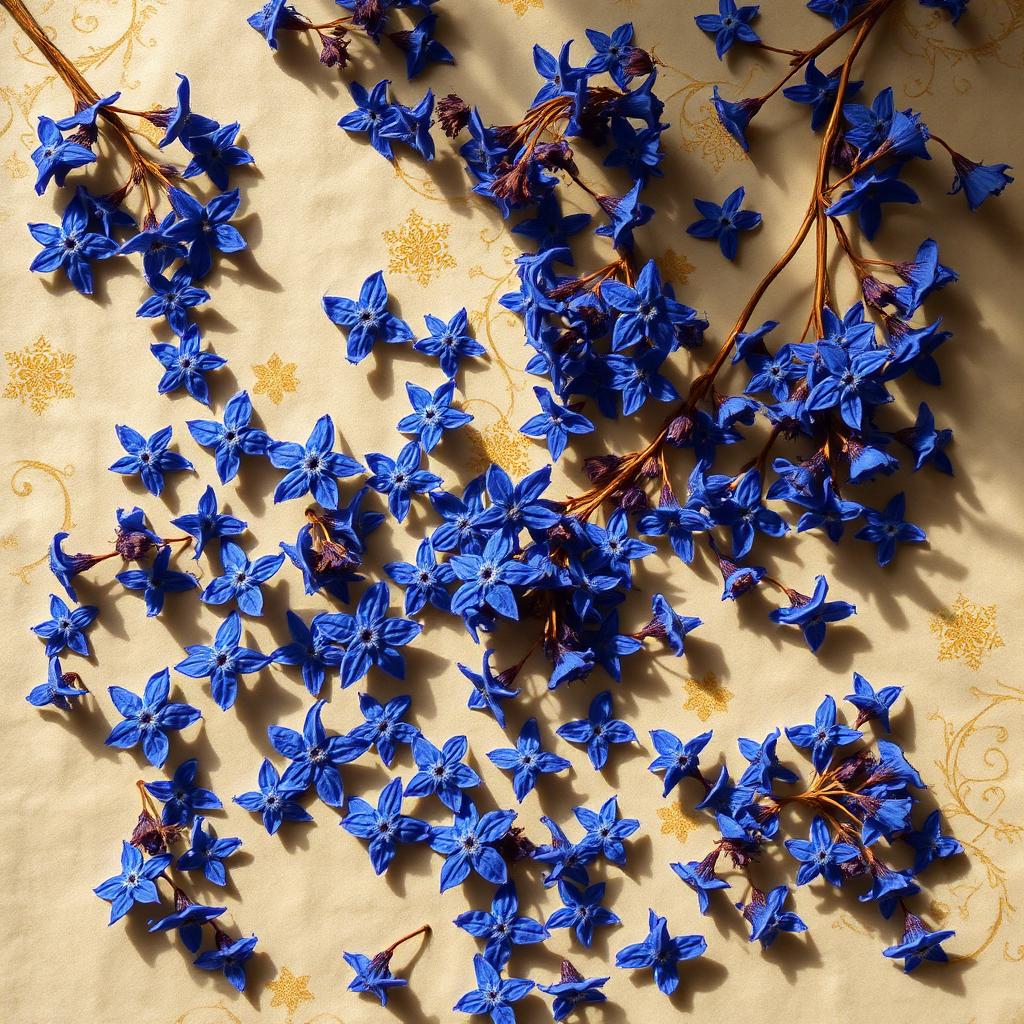
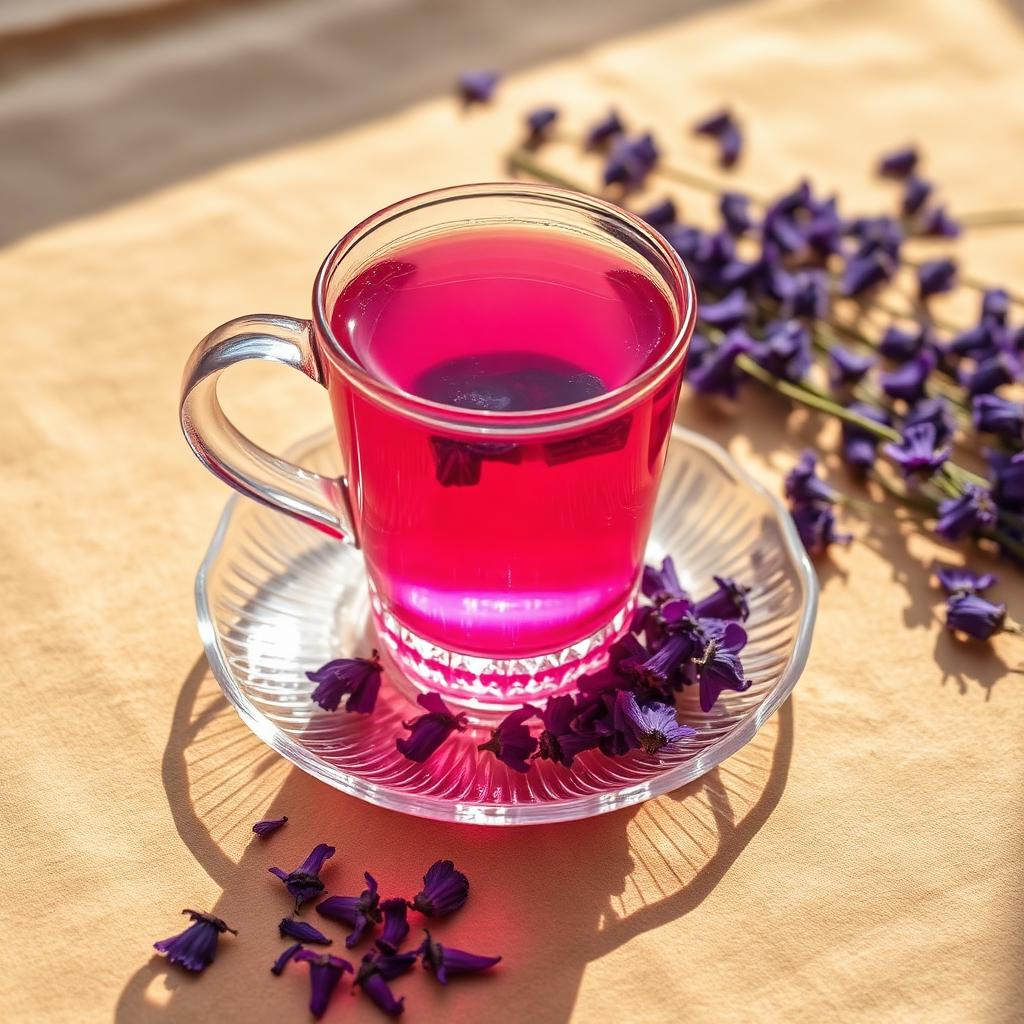
You'll notice the colour first: Gol-e gāv-zabān is the Persian mood-and-heart tea, pink-tinted and lightly sweetened with nabāt (Persian rock candy). Most of what is sold in Iran is Echium amoenum rather than true European borage.
Take it in cycles of two to three weeks rather than continuously. Its alkaloids (strong plant compounds that act on the body even in small amounts) load the liver.
Anyone drinking it daily should stick to certified PA-free (free of pyrrolizidine alkaloids, natural plant compounds that can harm the liver) flowers.
Persians have brewed gol-e gāv-zabān flowers for centuries as a gentle tea for the heart and mood. The violet-blue petals turn the cup pink, and generations have reached for it when sorrow feels heavy.
Known to botanists as Borago officinalis / Echium amoenum.
It also acts as a mild diaphoretic (a substance that makes you sweat), supporting the body through a cold, and the flowers carry polyphenols (protective plant compounds).
Chapter 2 of 14
The Plant Itself
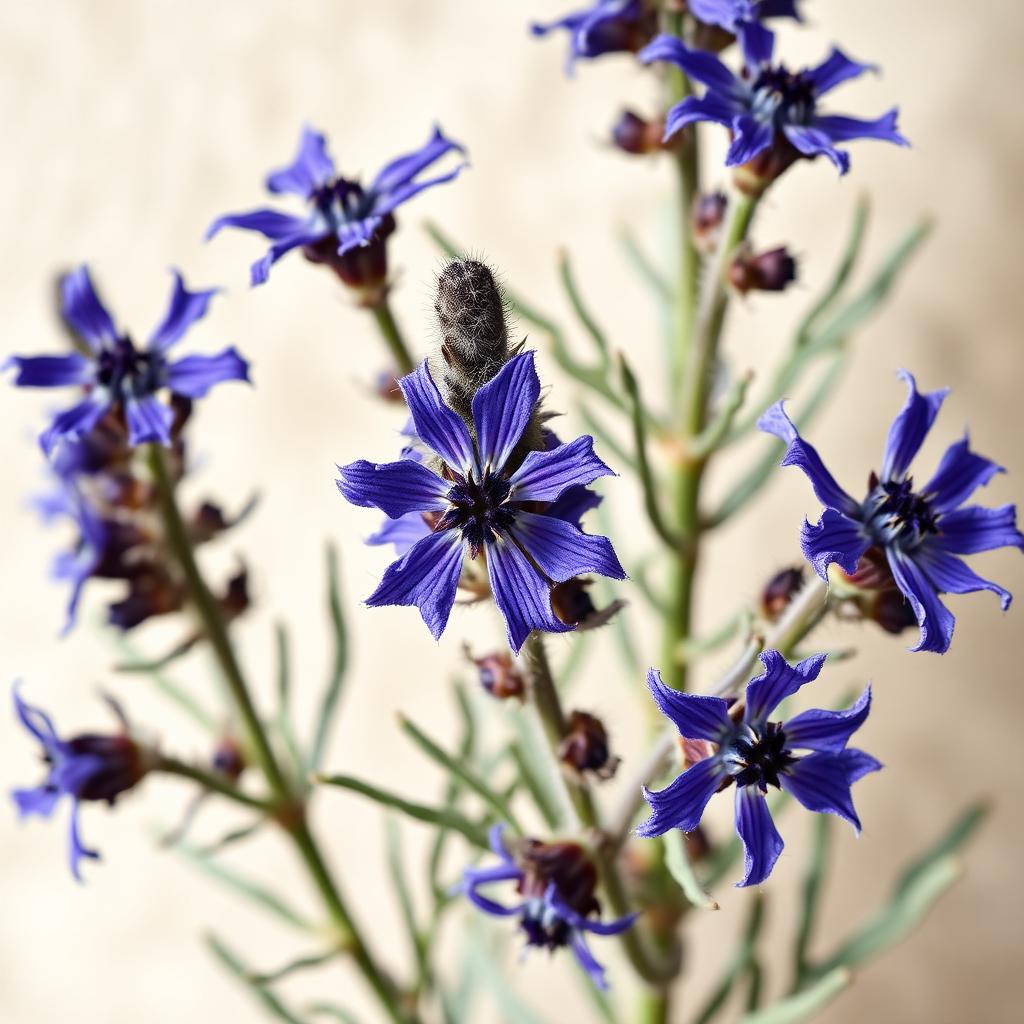
Persian gol-e gāv-zabān (Echium amoenum) is an upright biennial 30–60 cm tall with rough hairy lance-shaped leaves and striking deep violet-blue funnel-shaped flowers borne in branching clusters in spring. The dried flowers are the principal medicinal portion. European borage (Borago officinalis) is similar but bears five-petalled star-shaped blue flowers.
Family: Boraginaceae (borage family).
Chapter 3 of 14
What Is In It
Primary compounds
Rosmarinic acid is the dominant Boraginaceae polyphenol (protective plant compounds). Anti-inflammatory antioxidant with modest anxiolytic (calms anxiety) direction in animal models.
Anthocyanins (plant pigments that give red, blue, and purple colours, such as delphinidin and cyanidin glycosides) — responsible for the deep violet-blue petal colour and the pink hue in tea. Polyphenol (protective plant compounds) antioxidant load.
Cyanogenic-free saponins (soap-like plant compounds) are traditional soft demulcent (coats and soothes irritated tissue) action.
Other Constituents
Trace PAs (variable by cultivar and source) — the reason PA-free certified flowers matter.
Gamma-linolenic acid (GLA) is present in the seed oil (not the flower tea). Anti-inflammatory omega-6.
Other notable constituents
Notable: Volatile oils (the concentrated aromatic oil of the plant)
Chapter 4 of 14
What Studies in People Show
Strong evidence
Pyrrolizidine-alkaloid (strong plant compounds that act on the body even in small amounts) content varies by species, cultivar, and part of the plant. Regulatory bodies advise PA-free certified products and time-limited use.Strong evidence
Moderate evidence
Borage seed oil (GLA-rich) may modestly improve inflammatory-arthritis symptoms — not the same preparation as the flower tea.Moderate evidence
Early research
Echium amoenum (Persian borage) flower extract may reduce mild-to-moderate anxiety and depressive symptoms over 4–6 weeks vs placebo in small human trials.Emerging evidence
E. Amoenum aqueous extract reduced obsessive–compulsive symptoms as adjunctive therapy in a small 6-week randomised trial.Emerging evidence
Chapter 5 of 14
How It Is Prepared
Damkardeh: 1 tsp dried flowers per cup, covered 8 min, with nabāt or honey · Sleep blend: gol-e gāv-zabān + chamomile + linden + a pinch of rose.
Borage syrup: flowers simmered with sugar and rosewater, 1 Tbsp at bedtime.
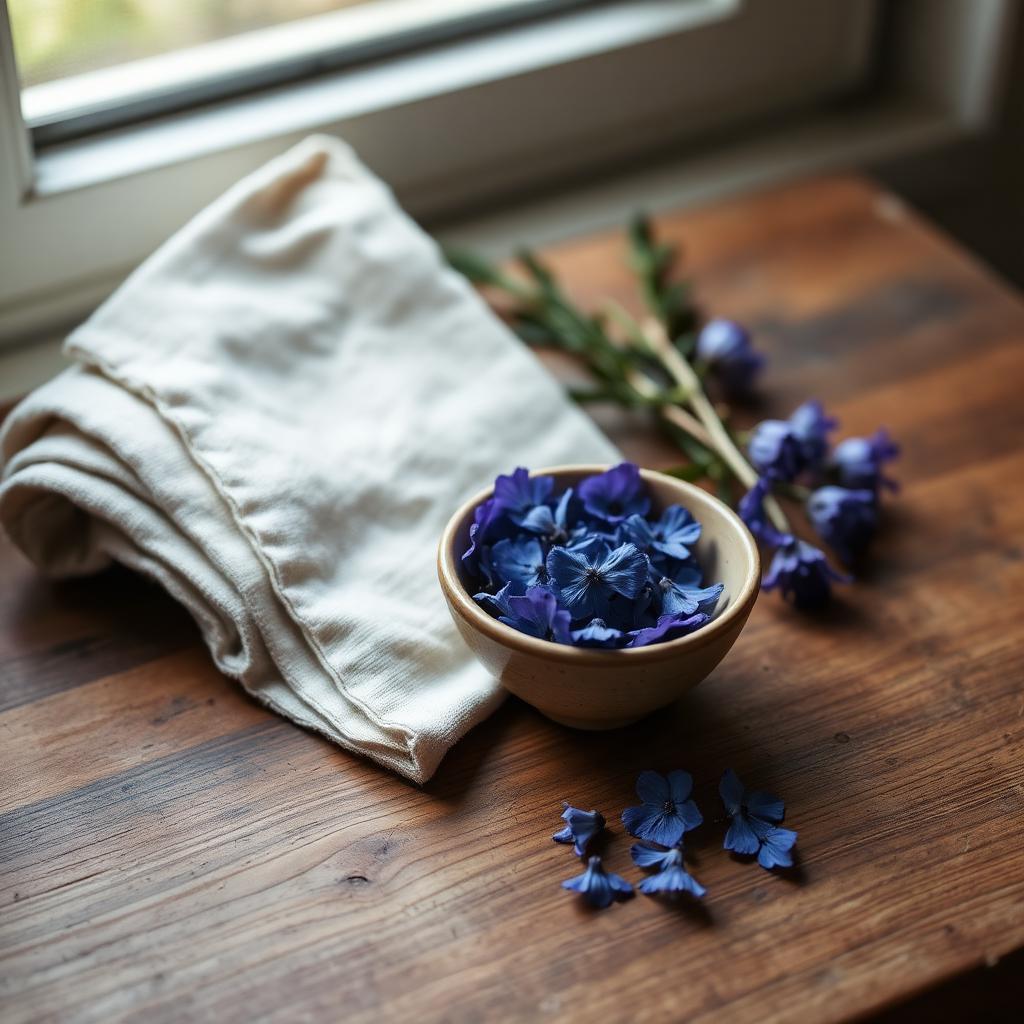
Bath: strong infusion (a drink made by steeping the plant in hot water) added to warm water for nervous tension.
Steep 1 tsp dried petals in hot water 5–10 min.
Combine with rosewater before bed.
Chapter 6 of 14
Medicines and Interactions
Medication interaction:
Anticoagulants (blood-thinning medicines such as warfarin) and DOACs (newer blood-thinning medicines such as apixaban and rivaroxaban) — GLA in borage seed oil may modestly reduce platelet aggregation, meaning blood cells clump together less to form clots. Flower tea is negligible, but concentrated seed-oil supplements warrant physician oversight. (moderate concern)
Medication interaction:
Hepatotoxic drugs (medicines that can harm the liver) & alcohol — Products not certified free of PAs add to the load on the liver. Always use certified products free of PAs. Avoid daily continuous use beyond 4–6 weeks. (moderate concern)
Medication interaction:
Antiseizure medicines (phenobarbital, phenytoin, carbamazepine) — Theoretical lowering of seizure threshold reported with high borage seed oil doses — avoid concentrated extracts alongside epilepsy therapy. (low concern)
Chapter 7 of 14
Who Should Be Careful
Pregnancy and breastfeeding:
Avoid medicinal doses in pregnancy or with liver conditions.
General caution:
Active liver disease (avoid non-certified PA-containing preparations).
General caution:
Borage seed oil contains GLA — use only PA-free certified products.
Avoid medicinal doses (concentrated flower tea daily, sharbat, seed oil capsules) in pregnancy — limited safety data and concern about pyrrolizidine alkaloids, natural plant compounds that can harm the liver. Occasional culinary or ceremonial cup isn't the issue; regular daily therapeutic use is.
Children
Children:
Half-strength cup of PA-free flower infusion (a drink made by steeping the plant in hot water), lightly sweetened, is a traditional Persian calming tea from around age 4. Skip honey under age 1. Concentrated seed oil not routinely used in children.
Older adults
Medication interaction:
One of the gentlest Persian household mood teas for the sixth and seventh decade — grief, sleeplessness with worry, a heavy heart. Use in cycles of 2–3 weeks; review anticoagulant (blood-thinning medicines) interactions and interactions with medicines that affect the liver before daily use.
Chapter 9 of 14
What Persian Medicine Says
Persian temperament: Warm & Moist (1st degree — flower). Ibn Sīnā (Canon, Book II) and Aghili Khorasani (Makhzan al-Adwiya) class gol-e gāv-zabān as warm and moist in the 1st degree — a mufarrih al-qalb (heart-gladdener) that lifts melancholy (sawdā'), calms a restless heart, and softens a cold-dry constitution. The classical Persian household damkardeh (a Persian steeped herbal infusion) for grief, exam stress, and sleepless nights.
In the Household
Persian medicine sees borage as warm and moist and counts it among the heart-gladdeners. It was given less for a physical complaint than for a mood: the flat, heavy melancholy of a cold-dry constitution, anxiety that keeps someone awake, or the low weeks after grief or illness. Its moistening nature was thought to suit dry, tense people especially.
The classical cup pairs the violet flowers with a little rose or lemon so the infusion (a drink made by steeping the plant in hot water) doesn't feel cloying. Modern practice adds one caution the old texts lacked: use it only in brief courses because of the liver-loading alkaloids (strong plant compounds that act on the body even in small amounts).
Chapter 10 of 14
What Persian Medicine Says: Older Uses
It was used: melancholy, grief, and anxious heart (mufarriḥ al-qalb). Restless sleep paired with low spirits. Mild colds and chills: gentle diaphoretic. Heart palpitations of nervous origin. Recovery from emotional shock or exhaustion.
Borage is traditionally uplifting for mood and calming before sleep. That's the role the Persian household actually keeps it for.
In Persian homes, families have long steeped gol-e gāv-zabān tea with nabāt for grief, exam stress, and sleepless nights.
Chapter 11 of 14
Traditional Formulas
Damnoosh-e gol-e gāv-zabān, meaning a borage herbal tea — Classical Persian damkardeh — 1 tsp dried petals + nabāt in a covered cup of just-boiled water, 10 min.
Persian melancholy blend: gol-e gāv-zabān + a pinch of saffron + 1 tsp rosewater for grief, anxiety, and a heavy heart.
Sharbat-e gāv-zabān is concentrated borage-flower syrup, 1 Tbsp in cool water, used in summer for restless hearts.
Chapter 12 of 14
Questions People Ask
What about pyrrolizidine alkaloids (PAs)?
Some plants in the borage family contain PAs, which can stress the liver if you take large or prolonged doses. Choose certified PA-free borage products, keep daily use modest (1–2 cups for a few weeks), and avoid it in pregnancy and liver conditions.
What does borage tea taste like?
Soft, slightly sweet, and faintly cucumber-like, with a pink hue once nabāt is added. The aroma is gentler than chamomile and beloved by people who find chamomile too bitter.
Chapter 13 of 14
Sources
Sad Giah Hezar Darman (صد گیاه و هزار درمان) — One Hundred Plants and One Thousand Remedies — Dr. Hossein Erfani, 4th edition (1375 / 1996–1997). Primary traditional Persian herbal reference cited throughout this platform. Presented as traditional knowledge, not as modern medical proof.
Office of Dietary Supplements: fact Sheets — US National Institutes of Health (NIH). https://ods.od.nih.gov/factsheets/list-all/.
Herbal Database: memorial Sloan Kettering Cancer Center. https://www.mskcc.org/cancer-care/diagnosis-treatment/symptom-management/integrative-medicine/herbs.
Herbs at a Glance: uS NIH National Center for Complementary and Integrative Health (NCCIH). https://www.nccih.nih.gov/health/herbsataglance.
FoodData Central: searchable nutrient database — US Department of Agriculture (USDA). https://fdc.nal.usda.gov/.
Chapter 14 of 14
Sources (continued)
The Nutrition Source: harvard T.H. Chan School of Public Health. https://www.hsph.harvard.edu/nutritionsource/.
PubMed — peer-reviewed biomedical literature — US National Library of Medicine. https://pubmed.ncbi.nlm.nih.gov/