Very high in anthocyanins (the natural colour pigments that make fruit red, purple or blue).
Usually cooked or juiced.
Very few cool-climate fruits carry this much vitamin C and this much pigment at the same time. Blackcurrant is proof that a fruit doesn't have to be sweet or tropical to be nutritionally serious.
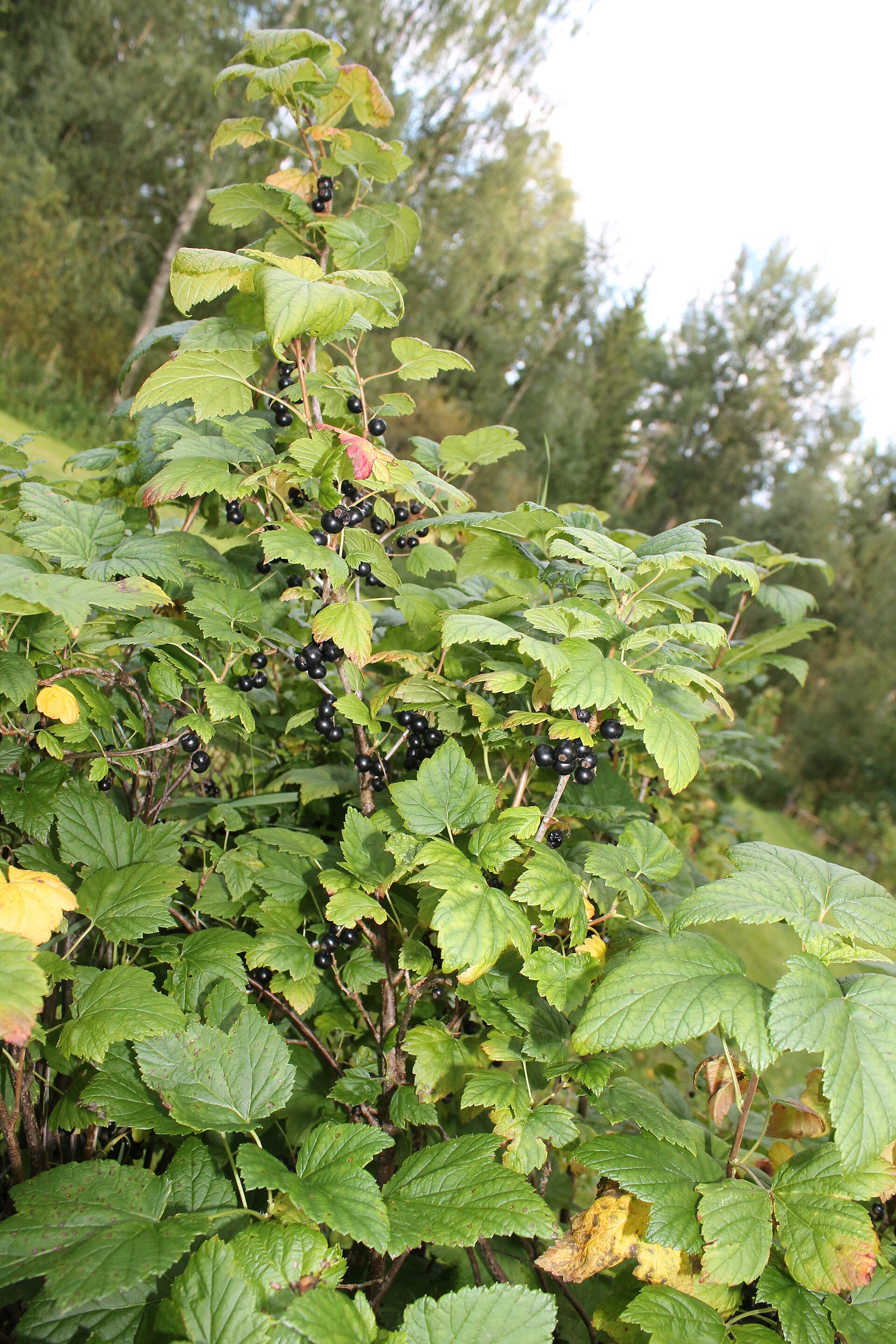
Blackcurrants are small, near-black berries that hang in short strings from a low bush. Each berry has a dry little tuft at its tip. Crush a leaf and the smell is sharp and unmistakable — the bush is as aromatic as the fruit.
Minerals: Potassium, Manganese, Iron · Antioxidants: Quercetin (a plant compound found in onions, apples and tea), Myricetin
Fiber: ~4.5 g per 100 g
Chapter 4 of 13
What Studies in People Show
What studies in people show
Blackcurrant is among the richest common fruits in vitamin C on compositional analysis.Strong evidence
Anthocyanin-rich blackcurrant intake improved measures of vascular (relating to the blood vessels) function in small human trials.Emerging evidence
Chapter 5 of 13
Preparation and Kitchen Use
Strip berries from the string with a fork.
Simmer five minutes with a little sugar. They collapse quickly.
Freeze on a tray, then bag — they keep a year.
Cooked into compote or jam, where the sourness works.
In the kitchen: as a cordial diluted with water. Frozen and blended with a sweeter fruit such as banana.
Cook briefly with a little sugar into a loose compote.
Stir a spoon of blackcurrant into plain yogurt.
Freeze whole and blend into a cold drink.
Chapter 6 of 13
Medicines and Interactions
Medication interaction:
Warfarin — Blackcurrant carries some vitamin K and the seed oil affects platelets slightly. Keep your intake steady rather than swinging between none and a lot. (low concern)
Medication interaction:
Antiplatelet (medicines that stop blood cells sticking together, such as aspirin) medicine — Blackcurrant seed oil supplements, not the fruit, are the ones worth raising with a prescriber. (low concern)
Medication interaction:
Diabetes medicine — Cordials are heavily sweetened. The sugar matters here, not the berry. (low concern)
Chapter 7 of 13
Who Should Be Careful
General caution:
Concentrated blackcurrant extracts and seed oil are supplements, not the same as eating the fruit.
General caution:
Commercial cordials are mostly sugar; check the label.
Children:
Honey isn't for infants under one year.
Chapter 8 of 13
Pregnancy, Children and Older Adults
Pregnancy and breastfeeding
Pregnancy and breastfeeding:
Good food in pregnancy. The vitamin C is genuinely high and the sourness often settles early nausea. Concentrated seed-oil capsules are a separate question for your doctor.
Children
Children:
Children usually meet blackcurrant as cordial, which is mostly sugar. Cooked fruit stirred into yogurt is the better introduction, and it's one of the few sour things children will eat.
Older adults
Older adults:
High vitamin C, useful fibre, and enough sharpness to wake a dull appetite. Cook it briefly with a little honey if the acid is uncomfortable.
Chapter 9 of 13
Traditional Uses in Europe
Persian temperament: Cool & Dry (1st degree). Sour and astringent (tightens tissue and leaves a dry feeling in the mouth). Old practice used sour dark fruit for heat and thirst, and gave it warm rather than cold to weak digestions.
In European folk practice the medicine was the blackcurrant LEAF, not the berry — brewed as a tea for aching joints and swelling. The berry itself went to sore throats and winter chills. Leaf preparations are a separate remedy from the fruit and should not be taken alongside medication without advice.
In the Household
Leaf tea used for joint aches — the leaf.
Cassis is a fixture in French kitchens and bars, and blackcurrant cordial is a childhood taste all across northern Europe. In Iran the currants stay a cooler-climate garden fruit, grown up north rather than sold widely.
Chapter 10 of 13
What It Goes With
Dairy:
Yogurt
Crush a spoonful of cooked fruit through thick yogurt. The sourness needs the fat behind it.
Honey:
Honey
Blackcurrant is too sharp to eat plain. Honey stirred in off the heat is the usual answer.
Fruit:
Apple
Apple softens the acid and thickens the pan. Which is why old cordials nearly always included one.
Pairing:
Walnut
Toasted walnut on a bowl of tart fruit turns a sharp taste into a meal.
Chapter 11 of 13
Through the Year
Spring:
Spring
The bushes leaf up and smell of blackcurrant before there's any fruit at all. Nothing to pick.
Summer:
Summer
Mid-summer is the whole season. The fruit ripens fast and picks in a fortnight.
Autumn:
Autumn
Over. What is left is what you froze or cooked.
Winter:
Winter
Frozen fruit into compote, and cordial by the spoon when someone has a sore throat.
Chapter 12 of 13
Questions People Ask
Why are fresh ones hard to find?
They're very seasonal and bruise quickly, so most are sold as juice or jam.
Is seed oil the same as the berry?
No. It's a concentrated supplement and can interact with blood thinners.
Chapter 13 of 13
Sources
Blackcurrant anthocyanins and vascular function: nutrients. https://pubmed.ncbi.nlm.nih.gov/33652662/.
Anthocyanins and cardiometabolic health: advances in Nutrition. https://pubmed.ncbi.nlm.nih.gov/28911535/.