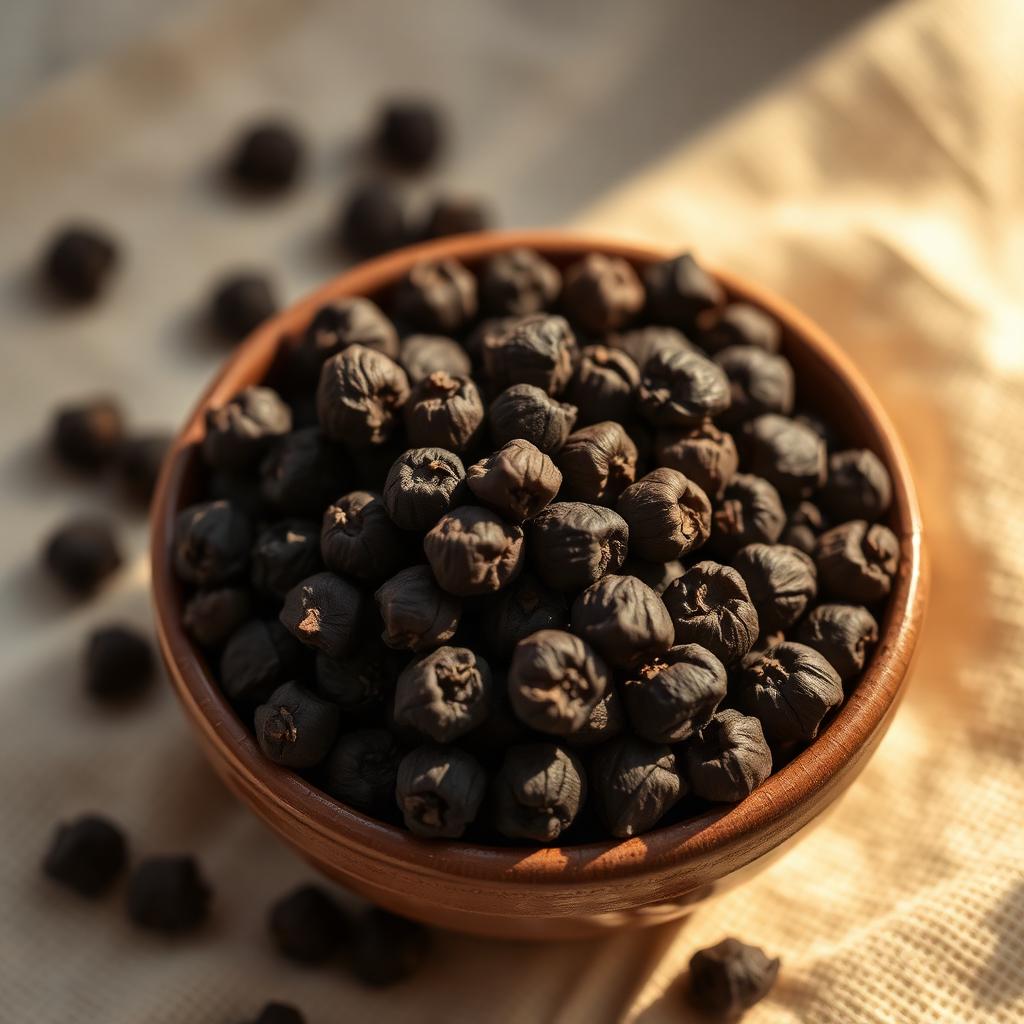
You'll notice the heat first. Most of the effects come from one compound, piperine.
Piperine greatly increases how much curcumin (the yellow compound that gives turmeric its colour) from turmeric reaches the blood.
It gently increases stomach juices, which is why it's used before heavy meals.
Grind it fresh. Ground pepper loses its punch within a few months.
What Else to Know
Black pepper is so common that it's easy to forget it was once worth its weight in silver. It sits on almost every table in the world. In Persian cooking it lifts stews, kababs, soups, and eggs. Its heat comes from piperine, and piperine does something quietly useful: it helps the body take in certain other compounds, most famously curcumin from turmeric. That's why the two spices belong in the same pot.
Known to botanists as Piper nigrum.
Chapter 2 of 10
Why Herbalists Still Reach for It
Pepper helps other ingredients do more. On its own, it gives digestion a small warming nudge. Beside turmeric, it helps make a golden dish more than just a colour. All it takes is a pinch, which makes it one of the easiest habits to keep.
Stomach acid can fall with age, making iron, B12, and protein harder to take in comfortably. A little pepper on food is one of the oldest ways to wake digestion up. It also helps food taste lively with less salt, which matters when you're watching blood pressure.
Gently stimulates stomach juices and appetite.
Warms a cold, slow digestion.
Chapter 3 of 10
The Plant Itself
Black pepper is a dried unripe berry from a climbing vine. The berries grow in long green strings. They're picked while still green, then boiled briefly and dried in the sun, which turns the skin black and wrinkled. White pepper is the same berry with the skin removed. The heat comes from a compound called piperine.
Family: Piperaceae (pepper family).
Chapter 4 of 10
What Is In It
Piperine is the compound behind the heat, and the reason pepper helps the body take in curcumin from turmeric.
Beta-caryophyllene is an aromatic oil also found in clove and rosemary, studied for calming irritated tissue.
Limonene is a bright citrus-smelling oil that carries much of pepper's fresh top note.
Pinene is a pine-scented oil common in resinous plants, part of what makes fresh-ground pepper smell alive.
Piperine content falls as ground pepper sits, which is why a mill beats a pre-ground jar.
Chapter 5 of 10
What Studies in People Show
What studies in people show
The best human evidence is that piperine, pepper's main compound, changes how the body absorbs other substances and some medicines. There are no good trials showing health benefits from eating pepper itself.
In a small human study, 20 mg of piperine taken with curcumin (the yellow compound that gives turmeric its colour) raised curcumin levels in the blood about 20-fold.
Reviews of the research find that piperine can change how some medicines are absorbed and broken down, which may help or harm depending on the drug and dose. How much this matters clinically is still being worked out.
Chapter 6 of 10
How It Is Prepared
Fresh grind: whole peppercorns in a mill, ground straight onto the plate.
Stir a pinch into warm milk with turmeric and a little fat for an evening drink.
Trikatu-style (a traditional three-spice Ayurvedic blend) digestive pinch — equal parts black pepper, ginger and long pepper before a heavy meal.
Broth peppercorns: six whole corns simmered in soup and strained out.
Other Ways to Use It
Freshly ground at the table for the strongest taste and effect.
A generous pinch in any dish that contains turmeric.
Coarsely cracked in slow stews, added near the end of cooking.
Grind fresh over food at the table.
Always add a pinch when you cook with turmeric.
Add to eggs, soups, and lentils for warmth without chilli heat.
Chapter 7 of 10
Who Should Be Careful
General caution:
Avoid large amounts with active stomach ulcers or reflux (stomach acid rising into the throat).
General caution:
Pepper supplements (BioPerine and similar) are far stronger than cooking amounts and deserve medical advice.
Pregnancy and breastfeeding:
Food amounts are safe in pregnancy; supplements aren't studied.
Medication interaction:
Keep to cooking amounts if you take regular medicines.
Medication interaction:
Piperine changes how the liver handles many medicines, so keep to food amounts if you take prescription drugs and ask your doctor about supplements.
Children:
Whole peppercorns can make small children cough — grind, don't scatter.
Chapter 8 of 10
What Persian Medicine Says
Persian medicine sees black pepper as warm and dry. People used it to warm a cold stomach, ease wind, clear a heavy head and chest, and wake a sluggish appetite. Because it's strongly warming, it was used carefully for people described as hot and avoided when the stomach was already irritated.
It was used: weak appetite and slow digestion. Wind and bloating after cold or heavy food. Heavy head and blocked chest in winter.
Pepper reaches the Persian table through kababs, ash soups, kuku, and the pepper pot that sits beside the salt at almost every meal. In the old spice trade, Persian merchants were among the main middlemen carrying pepper west from India.
Chapter 9 of 10
Questions People Ask
How much pepper does turmeric need?
Very little. Roughly one part pepper to twenty parts turmeric, which in a home kitchen means a normal pinch. Studies of curcumin (the yellow compound that gives turmeric its colour) absorption use similarly small amounts of piperine.
Does pepper burn the stomach?
Not in normal cooking amounts for most people. If you already have reflux (stomach acid rising into the throat) or an ulcer, heavy pepper can irritate, so go light.
Chapter 10 of 10
Sources
Influence of piperine on the pharmacokinetics of curcumin — Planta Medica.
Black pepper and health claims: a comprehensive review — Critical Reviews in Food Science and Nutrition.