Here's the thing: always soak basil seed before you eat it. A teaspoon in 200 ml of water for ten minutes swells it into a safe, cooling gel. Dry seed is a choking hazard.
That gel is one of the densest food-based sources of soluble fibre, around 7 g per tablespoon. It works as a bulk-forming laxative and a satiety (the feeling of being full) aid — the classical Persian answer to summer heat and thirst, muhaddi' (a calmer of internal heat) and mulayyin (a stool softener) in a single glass.
It isn't chia. Basil seed gels faster, holds more mucilage (a soft, slippery plant gel) per gram, and has a far longer record in the Persian household than Salvia hispanica.
Chapter 2 of 17
Getting to Know Basil Seed
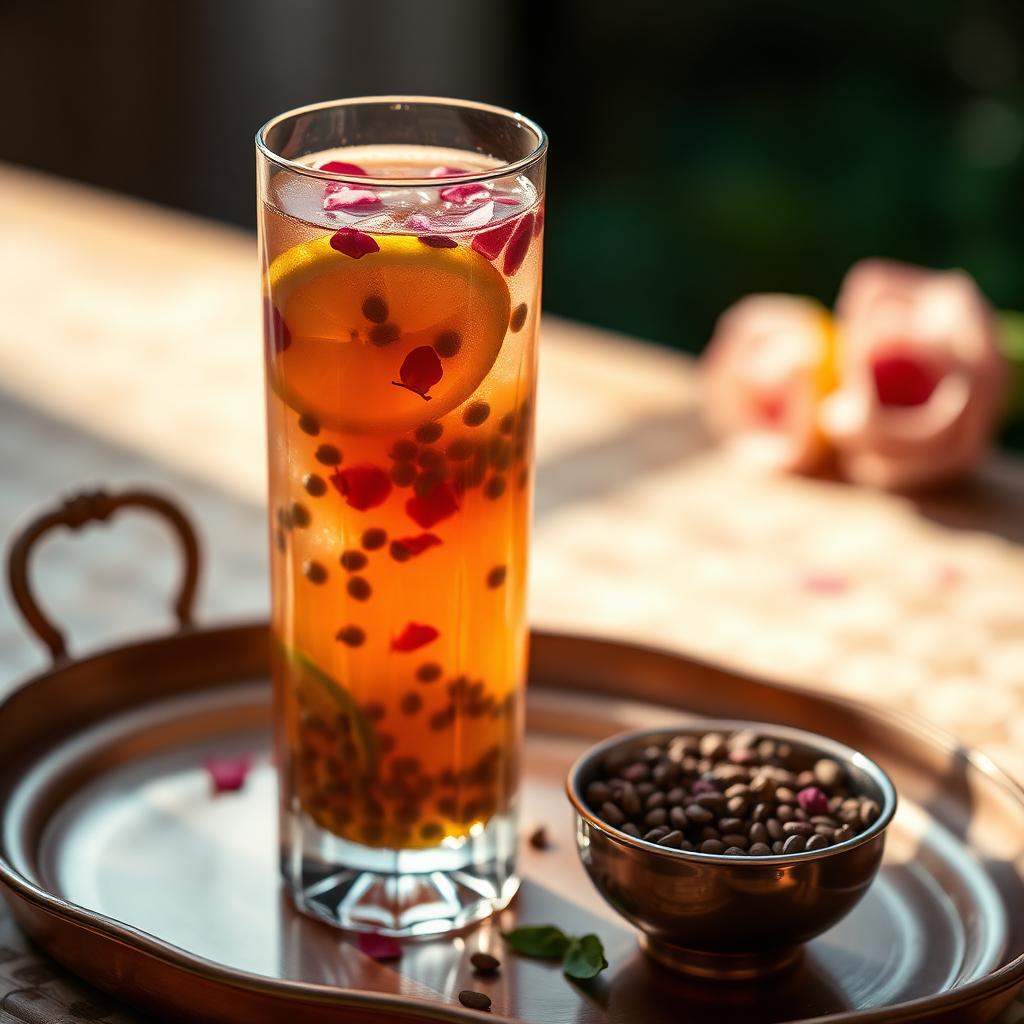
Basil seed — tokhmeh sharbati — is the ripe seed of sweet basil (Ocimum basilicum), the same plant whose leaves sit on the Persian sabzi khordan platter. Dry, the seed does nothing and looks like slate. Ten minutes in cool water and every seed swells into a see-through grey-blue gel, mucilage (a soft, slippery plant gel) that hangs beautifully in rosewater, lemon, and ice.
A Little More Background
A tablespoon of soaked seed (in ~200 ml water) gives you roughly 7 g of soluble fibre, 2 g plant protein, useful iron and magnesium, and a small dose of alpha-linolenic acid (ALA — the plant form of omega-3) — all for around 60 kcal. Persian summer kitchens build sharbat on it, spoon it over faloodeh, and drink a quiet glass of it after dinner when things feel heavy.
Modern research on Ocimum basilicum seed keeps landing in the same place: a gentle bulk-forming laxative, a soluble fibre that helps you feel full, and a mild blunter of the after-meal glucose rise — the same three effects behind the classical Persian reading of muhaddi' (heat-calming) and mulayyin (softening).
Chapter 3 of 17
Why It Matters
If you want one summer habit that's kind to the gut, takes the edge off thirst, and steadies the afternoon glucose curve without a supplement bottle, a glass of soaked tokhmeh sharbati in rosewater and lemon is one of the smallest, oldest, and most dependable things on the Persian table.
The soluble mucilage (a soft, slippery plant gel) does the work. It supports regularity as a bulk-forming laxative, and in small trials on prediabetic adults it blunted after-meal glucose.
Chapter 4 of 17
What It Contains
Primary compounds
Soluble mucilage (~40% of seed dry weight) — made of natural plant fibres that swell 5–10× in water into a cooling gel.
Alpha-linolenic acid (ALA, omega-3) — about 45–55% of the seed oil fraction. Comparable ALA density to flaxseed on a per-oil basis.
Rosmarinic acid and caffeic acid are polyphenols (natural plant compounds studied for antioxidant activity) — the same ones that colour basil leaf — with in-vitro antioxidant and mild anti-inflammatory activity.
Iron (~2 mg per Tbsp) and magnesium (~30 mg per Tbsp) — supportive minerals for a summer diet often light on both.
Vitamins
Vitamin K, Folate (small)
Other notable constituents
Minerals: Calcium, Manganese · Protein: ~2 g per 1 Tbsp · Notable: Higher mucilage (a soft, slippery plant gel) density than chia per gram
Chapter 6 of 17
In the Laboratory
From laboratory work, not from people taking it
Ocimum basilicum seed mucilage (a soft, slippery plant gel) functions as a soluble bulk-forming fibre in vitro (in laboratory dishes, not in people) and modestly improves stool consistency and frequency in constipation trials. Rated: moderate evidence.
Chapter 7 of 17
What Studies in People Show
What studies in people show
Basil-seed supplementation blunted after-meal glucose and improved blood-sugar markers in adults with type 2 diabetes in a small randomised trial.Emerging evidence
Compositional analyses confirm basil seed contains ~40% soluble mucilage and 45–55% alpha-linolenic acid in its oil fraction — the two components that anchor its clinical use.Moderate evidence
Chapter 8 of 17
Preparation and Kitchen Use
Late morning or mid-afternoon as a summer sharbat, or a small evening glass for gentle relief of hot-type constipation. Avoid within 1–2 hours of levothyroxine or other narrow-window medicines.
Soak 1 tsp whole seeds in 200 ml cool water for 10 minutes until fully gelled — never eat dry.
Stir into rosewater + lemon + honey sharbat with ice on a summer afternoon.
Top faloodeh, chia pudding, and coconut-milk desserts as a cooling garnish.
Blend soaked seeds into smoothies for a fibre-rich thickener.
Store dry seeds in a sealed jar in a cool dry cupboard for up to a year. Use soaked gel within 24 hours.
Chapter 9 of 17
Medicines and Interactions
Medication interaction:
Warfarin, DOACs (a newer type of blood thinner, such as apixaban, rivaroxaban, dabigatran) — Vitamin K in soaked basil seed is low and stable at culinary portions. INR (the blood test that shows how fast your blood clots) isn't clinically affected by a daily sharbat. Very large habitual intake is a theoretical caution. Before planned surgery, stop concentrated basil-seed use 1 week ahead because ALA has a mild antiplatelet (blood-thinning) effect. (low concern)
More Interactions to Know
Medication interaction:
Oral medicines generally (levothyroxine, oral contraceptives, tetracyclines (a type of antibiotic), bisphosphonates (bone-strengthening medicines)) — Mucilage (a soft, slippery plant gel) can bind and delay the absorption of oral medicines. Space basil-seed doses at least 1–2 hours from prescription medicines, especially levothyroxine. (moderate concern)
Medication interaction:
Antidiabetics (medicines that lower blood sugar), such as insulin, sulfonylureas (a common type of diabetes tablet) and metformin — Basil seed gently blunts after-meal blood sugar. The added blood-sugar effect at food amounts is gentle; monitor if starting a daily habit alongside insulin. (low concern)
Medication interaction:
Antihypertensives (blood-pressure medicines) — Mild added effect in the same direction from magnesium and hydration; food-scale effect, no clinically important interaction. (low concern)
Chapter 10 of 17
Who Should Be Careful
General caution:
Always soak before eating — dry seeds swell in the throat and can cause choking or oesophageal obstruction (a blockage in the food pipe).
Medication interaction:
Drink water with every dose — mucilage (a soft, slippery plant gel) requires water to work safely.
Allergy
Allergy:
Introduce gradually (start at 1 tsp) and build slowly to let the gut adjust.
Allergy:
Active bowel obstruction, oesophageal stricture, or severe gastroparesis — the swelling mucilage (a soft, slippery plant gel) can worsen the blockage.
Allergy:
Known basil (Ocimum) allergy (uncommon but documented) — avoid seed and any preparation.
Children:
Difficulty swallowing (dysphagia) or infants under 12 months — the gel isn't appropriate; use another cooling drink.
Chapter 11 of 17
Pregnancy, Children and Older Adults
General
Children:
Whole nuts and seeds are a choking hazard for young children.
Pregnancy and breastfeeding
Pregnancy and breastfeeding:
Soaked basil seed in ordinary food amounts (1–2 tsp per day as a cooling drink) is considered safe in pregnancy and is a traditional Persian summer refreshment offered to pregnant women for heat and mild constipation. Concentrated basil-seed extracts and essential oil (the concentrated aromatic oil of the plant) of basil are avoided in pregnancy because concentrated Ocimum preparations have shown uterine-stimulant activity (can trigger contractions) in animal studies. Culinary sharbat isn't the same as concentrated extract.
Chapter 12 of 17
Pregnancy, Children and Older Adults: Other Groups to Consider
Children
Children:
Small culinary sharbat servings (½–1 tsp soaked seed in water with rosewater) are appropriate from around 12 months once the child can handle textured liquids safely. Not for infants under 12 months (gel texture is a choking risk and honey isn't appropriate before 1 year). Always fully soaked, never dry.
Older adults
Older adults:
A quietly useful summer habit for older adults: hydrating, gently laxative, and cooling for the hot-and-dry summer constitution that becomes more common with age. Watch the delay that the seed gel (mucilage) causes to levothyroxine (a thyroid medicine) and other narrow-window medicines, whose dose has to stay exact. Space them by 1–2 hours from the daily sharbat. For anyone with dysphagia (difficulty swallowing), blend the soaked gel with more water into a thin drink or choose another cooling alternative.
Chapter 13 of 17
Traditional Persian Perspective
Persian temperament: Cool & Moist (Cold 2nd, Moist 2nd degree). Classical Persian medicine (Aghili Khorasani, Makhzan al-Adwiya) reads tokhmeh rihān — another traditional name for the same seed — as cold and moist in the second degree. It's muhaddi' (heat-calming), mulayyin (stool-softening), and mubarrid (cooling for febrile (feverish) summer complaints).
It's the classic warm-season sharbat seed of the Persian household, given to children with summer fever, adults with heartburn from spiced food, and elders whose bowel has grown dry.
In the Household
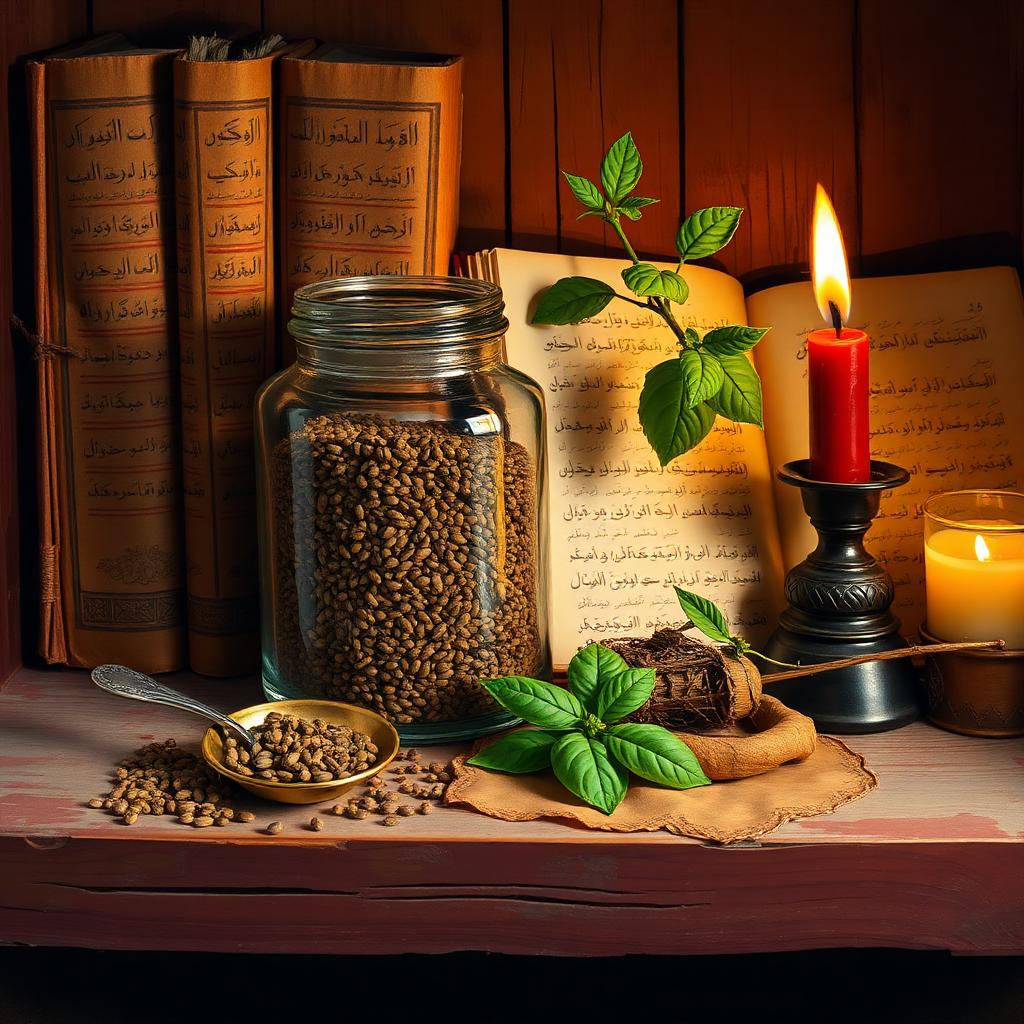
In Aghili Khorasani's Makhzan al-Adwiya, and in the Persian households that followed it, basil seed was used to cool stomach heat, take the edge off hard thirst, and ease hot-type summer constipation. The method never changes: soak the seed in cool water until it gels, then sweeten it with rose water, quince syrup, or lemon and honey. It goes to children with fever, to adults with heartburn from spiced food, and to elders whose bowel has turned hot and dry.
Chapter 14 of 17
Traditional Persian Perspective: Older Uses
Ayurveda reads sabja the same way — sheeta (cooling) and vata-pitta pacifying (balancing, in Ayurvedic terms) — and Southeast Asian kitchens put it in coconut-milk desserts for the same cooling job.
Children
Evening digestive glass for gentle relief of dry, hot-type constipation (mulayyin).
Cooling drink for children with summer fever (with rosewater and honey — no honey under 12 months).
Faloodeh (a Persian frozen dessert) and rooh afza (a rose-flavored syrup drink) garnish across Iran, India, and Pakistan.
As a drink it's cooling and hydrating, the classical Persian summer base. The seed itself supplies plant omega-3 (ALA) toward a healthier omega-6 to omega-3 balance, plus iron and magnesium that summer diets often run light on, and rosmarinic acid (a plant antioxidant) for antioxidant support.
Chapter 15 of 17
In Persian Life
In Iran, a glass of khakshir (flixweed seed, another cooling seed used in Persian drinks) and tokhmeh sharbati sold on a hot Tehran afternoon is as iconic as ice cream elsewhere — sold from copper-tanked carts and Nowruz street stalls, offered as the first refreshment to a summer guest, and pressed into the hand of anyone recovering from a fever. In India and Pakistan the same seed floats in falooda and rooh afza. In Thailand and Vietnam it turns up in coconut-milk desserts. Across the whole Indian-Persian-Arab summer world, tokhmeh sharbati is the household answer to heat.
Chapter 16 of 17
Questions People Ask
Why must I soak basil seeds first?
Dry seeds are hard, dense, and swell rapidly on contact with saliva — a genuine choking and oesophageal-obstruction risk. Ten minutes in cool water fully hydrates the mucilage (a soft, slippery plant gel) before it reaches your throat.
Can basil seed help with constipation?
Yes — a nightly small glass of soaked basil seed works as a gentle bulk-forming laxative, the classical Persian mulayyin action. Drink water alongside and give it a few days to settle in.
Are basil seeds safe in pregnancy?
Culinary sharbat in ordinary summer amounts (1–2 tsp per day) is safe and traditional. Concentrated basil essential oil and high-dose extracts aren't. When in doubt, discuss with the pregnancy provider.
Chapter 17 of 17
Sources
Office of Dietary Supplements: nuts & Seeds — US National Institutes of Health (NIH). https://ods.od.nih.gov/factsheets/list-all/.
FoodData Central: uS Department of Agriculture. https://fdc.nal.usda.gov/.