Among the most beta-carotene-dense stone fruits — meaningful daily support for skin, mucosa, and vision.
Dried qeysi delivers concentrated potassium and soluble fibre — a natural, gentle laxative when soaked.
Kernels contain amygdalin — the flesh is safe, the raw kernel isn't.
Chapter 2 of 13
What Apricot Actually Is
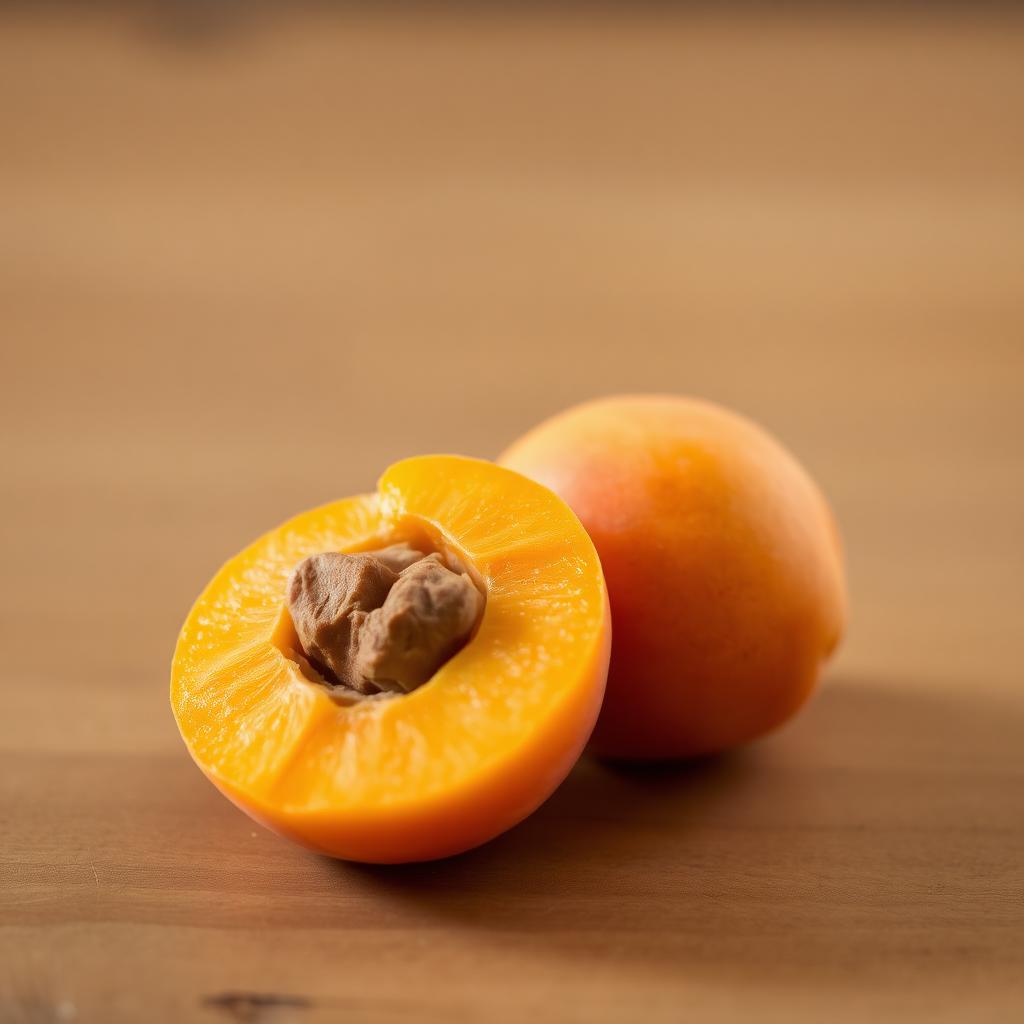
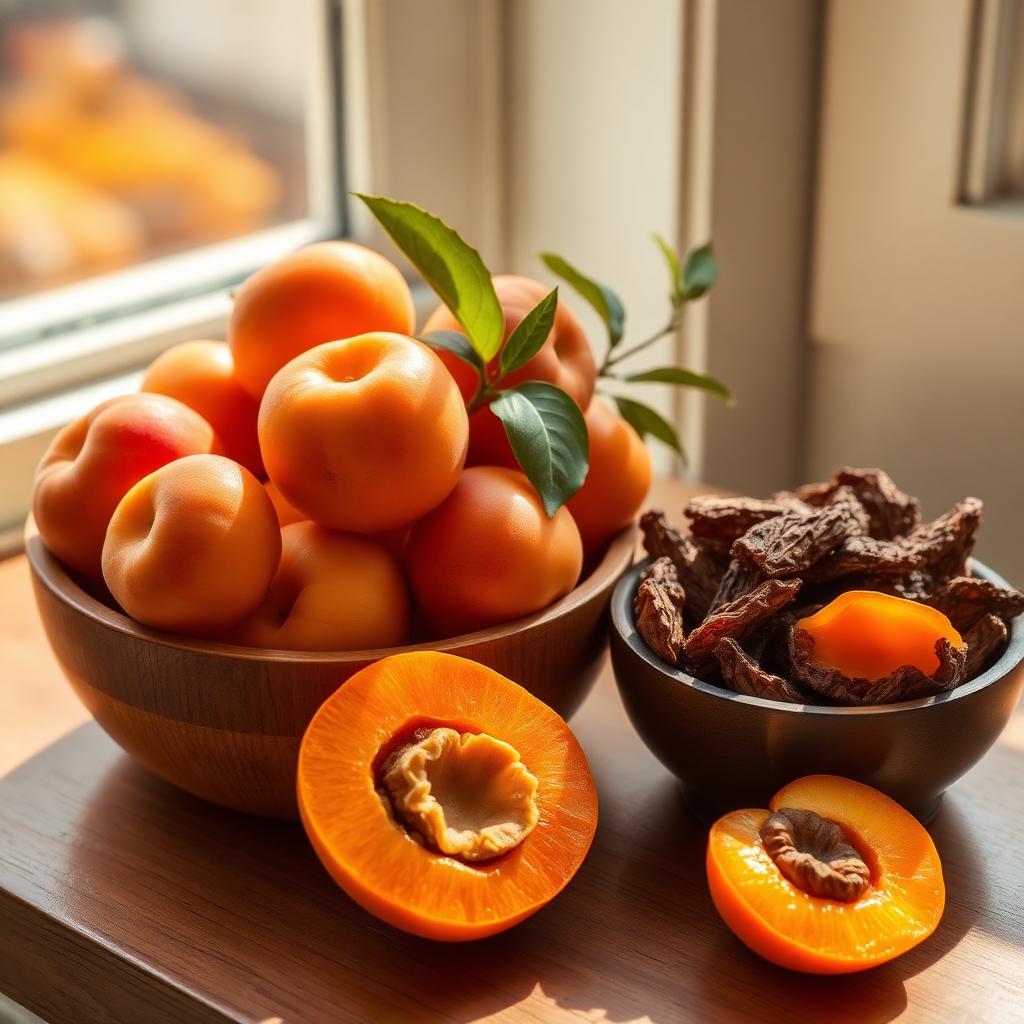
Apricots (Prunus armeniaca) have travelled the Silk Road between the Iranian plateau, Central Asia, and the Mediterranean for at least four thousand years. Fresh zardalu ripens in early summer. Sun-dried Persian qeysi carries that same fruit into winter, with carotenoids (the orange and yellow plant pigments your body can use), potassium, and soluble fibre concentrated into an easy, portable form. Traditional Persian medicine sees apricot as gently moistening for the chest and skin. Modern nutrition values it as one of the richest household sources of beta-carotene, potassium, and prebiotic (fibre that feeds the helpful bacteria in your gut) fibre.
Chapter 3 of 13
Why It Matters
Healthy skin, steady blood pressure, and regular bowel movements all matter more over time. A small handful of soaked qeysi at breakfast is an old Persian habit that supports all three at once. You get sweetness without refined sugar, potassium without a pill, and fibre in a form many older people find easy to tolerate.
Apricot supports three everyday parts of healthy aging: whole-food potassium for blood pressure, carotenoids (the orange and yellow plant pigments your body can use) for the skin and eyes, and gentle bowel support in a form older adults can chew and digest easily. Soaked qeysi + walnut is a simple habit you can repeat without much effort, and those small choices add up over time.
Beta-carotene supports skin, mucosa, and eye health.
Soluble fibre and sorbitol support digestive regularity.
Naturally sweet: supports moving away from refined sweets.
Chapter 4 of 13
What It Contains
Primary compounds
Beta-carotene and other pro-vitamin-A carotenoids (the orange and yellow plant pigments your body can use) are the mechanism behind the skin and mucosal traditional reputation.
Potassium is the driver of the blood-pressure and vascular (relating to the blood vessels) tone benefit in normal food amounts.
Chlorogenic acid, catechins (plant compounds common in green tea), quercetin — rose-family polyphenols (protective plant compounds).
Other Constituents
Amygdalin (kernel only) — the reason the flesh is safe and the raw kernel isn't.
Other notable constituents
Minerals: Copper, Manganese · Antioxidants: Lutein (a yellow pigment linked to eye health), Zeaxanthin
Chapter 5 of 13
What Studies in People Show
Strong evidence
Dietary potassium from fruit and vegetables is linked to modest reductions in systolic and diastolic blood pressure across meta-analyses (a study that pools the results of many trials) of controlled trials.Strong evidence
Early research
Beta-carotene and other pro-vitamin-A carotenoids from whole-food sources are linked to lower incidence of age-related macular degeneration and better skin-barrier function in observational (based on watching what people already do) and interventional studies.Emerging evidence
Dried fruit consumption — including apricots — has been associated with modest improvements in diet quality, nutrient density, and body-weight trajectories in cohort analyses.Emerging evidence
Chapter 6 of 13
Using It in the Kitchen
Fresh apricot in early summer. Soaked dried qeysi at breakfast through autumn and winter. A small dish either way is enough — this fruit rewards a daily habit.
Soak 4–6 dried qeysi in warm water overnight. Eat with the water on an empty stomach.
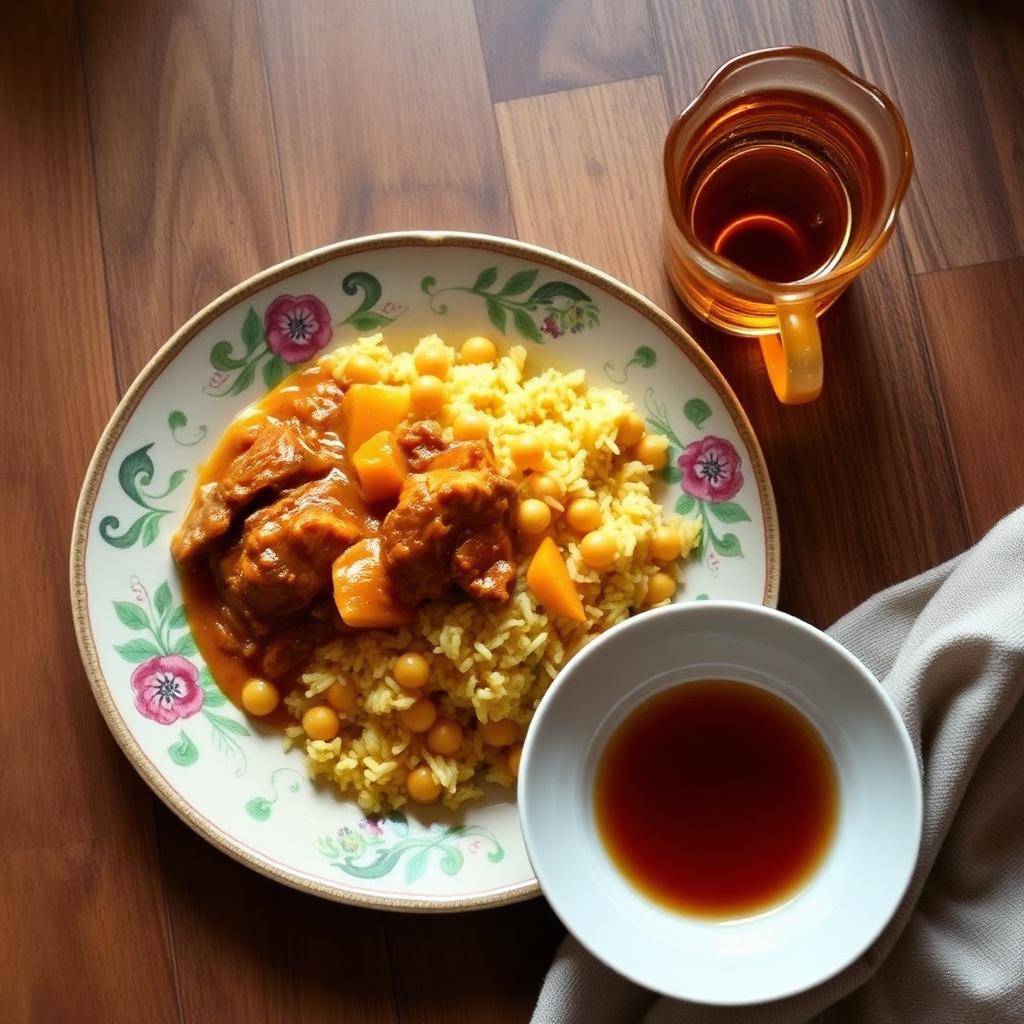
In the kitchen: braise dried apricots with lamb, saffron, and split peas for khoresh-e zardalu. Stuff a dried apricot with a walnut half for a Persian tea-table ājeel.
Simmer into a compote with cinnamon and rosewater for cold-season dessert.
Slice fresh apricots over yogurt with honey and a whisper of cardamom.
Chapter 7 of 13
Medicines and Interactions
Medication interaction:
Antihypertensives (ACE inhibitors, ARBs, potassium-sparing diuretics) — Dried apricots deliver a meaningful potassium load. Additive and generally helpful in normal food amounts; heavy daily qeysi portions on layered antihypertensives (especially spironolactone/amiloride) or advanced kidney disease warrant clinician review to avoid hyperkalaemia. (low concern)
Medication interaction:
Warfarin — Apricot is low in vitamin K and doesn't destabilise INR (the blood test that shows how fast your blood clots) in normal food amounts; sudden shifts in dried-fruit intake are still worth flagging when INR is being tuned. (low concern)
Medication interaction:
Antidiabetic medication (insulin, sulfonylureas) — Dried apricots are concentrated sugar despite a moderate glycaemic index (a measure of how fast a food raises blood sugar); pair with walnut or yogurt and coordinate portions when on insulin or sulfonylureas. (low concern)
Chapter 8 of 13
Who Should Be Careful
General caution:
Advanced kidney disease on strict potassium restriction — dried qeysi are potassium-dense; check with the renal dietitian.
General caution:
Sulphite-preserved bright-orange dried apricots may trigger sulphite-sensitive asthma — choose unsulphured (darker brown) if sensitive.
General caution:
Dried apricots are concentrated fructose and sorbitol — moderate portions in fructose-malabsorption or IBS elimination phases.
Allergy:
Rosaceae cross-allergy — those with birch-pollen oral allergy syndrome may react to raw fresh apricot.
Medication interaction:
Raw apricot kernels at any medicinal dose (cyanogenic amygdalin).
General caution:
Severe fructose malabsorption — dried apricots are notably high in fructose and sorbitol.
Chapter 9 of 13
Pregnancy, Children and Older Adults
General
Children:
Apricot kernels contain amygdalin — never eat raw kernels in quantity, and never give kernels to children.
Pregnancy and breastfeeding
Pregnancy and breastfeeding:
Fresh apricot and modest portions of soaked qeysi are safe and traditionally recommended in pregnancy for gentle constipation relief, iron/potassium support, and dry-skin patterns. Kernels are avoided at any dose in pregnancy.
Children
Children:
Soft ripe fresh apricot from ~8 months, skinned and mashed; small pieces of soaked qeysi from ~12 months (never whole dried apricots to under-3s — choking risk). Never offer apricot kernels to children at any age.
Older adults
Older adults:
One of the highest-leverage autumn/winter fruits for older adults: soft when soaked, gentle on chewing, quietly moves the bowel, and delivers potassium and carotenoids (the orange and yellow plant pigments your body can use) in a form the constitution tolerates. A small breakfast bowl of soaked qeysi with walnut is a classical Persian daily habit for the older cohort.
Chapter 10 of 13
Traditional Persian Perspective
Persian temperament: Warm & Moist (1st degree). Persian medicine reads zardalu as warm and moist — moistening for chest and skin, blood-generative, gently opening for the bowel. Dried qeysi is warmer and more concentrated than the fresh fruit.
Ibn Sīnā and Aghili Khorasani classify mishmish/zardalu as warm and moist in the 1st degree. They used it to moisten the chest, soften a dry cough, brighten the skin, and help build the blood. Fresh apricot was preferred for hot-dry constitutions in summer. Dried qeysi was chosen in colder seasons to restore the chest and skin.
In the Household
The idea was to match the form to the person: fresh fruit cools and moistens someone who runs hot, while dried fruit warms and builds someone who has grown thin and dry. Both were eaten in small amounts because apricot is considered loosening to the bowel.
It was used: dull, dry skin and post-illness convalescence. Cold-and-dry pattern constipation (soaked dried apricots on empty stomach).
Chapter 11 of 13
Traditional Persian Perspective: Older Uses
It was used: summer heat: fresh apricot as a cooling snack. Traditional remedy for dry cough and dry-skin patterns.
Lavashak, a sour apricot fruit leather, is a beloved Persian childhood snack. Khoresh-e zardalu (apricot-and-lamb stew) with saffron is a signature summer dish. Soaked qeysi appears on the Nowruz haft-sīn table beside sonbol and sib, and dried apricots stuffed with walnut are one of the oldest forms of Persian ājeel.
Chapter 12 of 13
Sources
Prunus armeniaca is a review of pharmacology and phytochemistry — Journal of Ethnopharmacology (PubMed). https://pubmed.ncbi.nlm.nih.gov/30716446/.
Beta-carotene and vitamin A: nIH Office of Dietary Supplements — US NIH ODS. https://ods.od.nih.gov/factsheets/VitaminA-HealthProfessional/.
Dried fruit and heart and blood vessel risk — Systematic review — Nutrients (NIH PMC). Https://www.ncbi.nlm.nih.gov/pmc/articles/PMC7019473/
Sad Giah Hezar Darman (صد گیاه و هزار درمان) — One Hundred Plants and One Thousand Remedies — Dr. Hossein Erfani, 4th edition (1375 / 1996–1997). Primary traditional Persian herbal reference cited throughout this platform. Presented as traditional knowledge, not as modern medical proof.
Office of Dietary Supplements: fact Sheets — US National Institutes of Health (NIH). https://ods.od.nih.gov/factsheets/list-all/.
Chapter 13 of 13
Sources (continued)
Herbal Database: memorial Sloan Kettering Cancer Center. https://www.mskcc.org/cancer-care/diagnosis-treatment/symptom-management/integrative-medicine/herbs.
Herbs at a Glance: uS NIH National Center for Complementary and Integrative Health (NCCIH). https://www.nccih.nih.gov/health/herbsataglance.
FoodData Central: searchable nutrient database — US Department of Agriculture (USDA). https://fdc.nal.usda.gov/.
The Nutrition Source: harvard T.H. Chan School of Public Health. https://www.hsph.harvard.edu/nutritionsource/.
PubMed — peer-reviewed biomedical literature — US National Library of Medicine. https://pubmed.ncbi.nlm.nih.gov/