Magnesium-rich: supports sleep, muscles, and a steady nervous system.
Studied for cholesterol, blood-sugar balance, and satiety (the feeling of being full).
Soaked-and-peeled almonds are a classic Persian calming breakfast.
Chapter 2 of 15
Getting to Know Almond
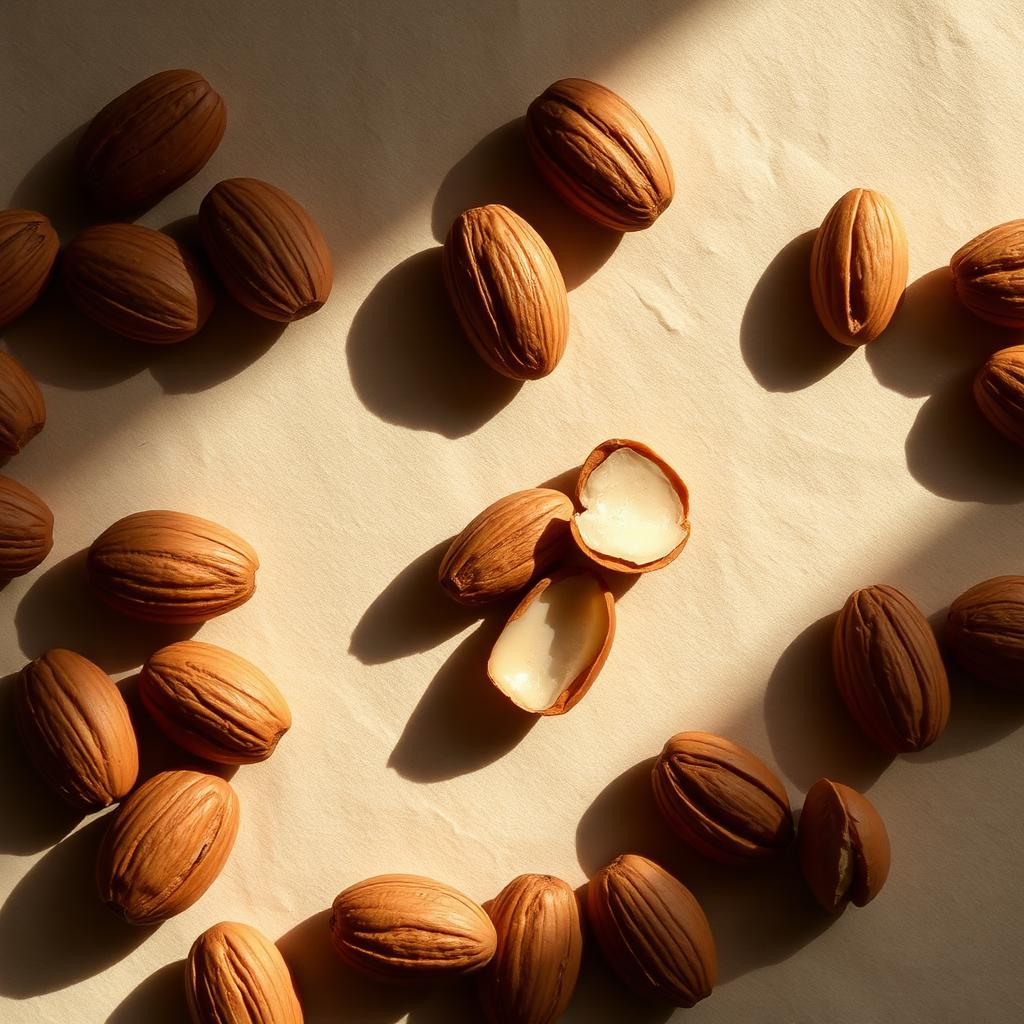
Almonds (Prunus amygdalus) have grown along the Silk Road for thousands of years, and they're still one of the most studied nuts in modern nutrition. They're packed with vitamin E and magnesium, they bring plant protein and good fats, and they sweeten Persian and Mediterranean cooking alike. In classical Persian medicine almost every part of the tree — flowers, leaves, bark, fruit, and oil — had a job in the house.
Known to botanists as Prunus amygdalus (syn. Prunus dulcis).
Chapter 3 of 15
Why It Matters
Heart health, steady blood sugar, and decent sleep are three of the things that decide how well you age — and almonds quietly help with all three. A small handful a day is about the cheapest well-evidenced healthy-aging food there's.
Almonds touch the four things that quietly matter after 50: vitamin E for skin and nerves, enough magnesium for blood vessels, sleep and calm muscles, steadier cholesterol and after-meal blood sugar, and fibre that feeds the good bacteria in your gut — all from a food the Persian pantry has kept for a thousand years.
What That Means Day to Day
Rich in vitamin E: supports skin and antioxidant defenses.
Can help keep LDL (the harmful type of cholesterol) cholesterol healthy when it replaces refined snacks.
Fiber and protein keep you full and well fed for longer.
Chapter 4 of 15
What It Contains
Primary compounds
Alpha-tocopherol (vitamin E): almonds are among the densest whole-food sources (~7.3 mg per oz, ~48% of the daily target).
Magnesium (~76 mg per oz): cofactor for NMDA/GABA balance, vascular (relating to the blood vessels) tone, and neuromuscular calm.
Monounsaturated (oleic) + linoleic fats are the fat profile behind almond's consistent LDL-lowering signal.
Other Constituents
Skin flavonoids (catechins, epicatechins, kaempferol) — antioxidants concentrated in the brown seed coat. Plant sterols (~34 mg per oz) — modest additional LDL (the harmful type of cholesterol) contribution.
Prebiotic fibre (~3.5 g per oz) — feeds the helpful bacteria in your gut, including Bifidobacterium and Lactobacillus, in the colon.
Chapter 5 of 15
What It Contains: The Rest of the Picture
L-arginine: nitric-oxide precursor for endothelial function (how well the thin lining inside your blood vessels works).
Vitamins
Riboflavin (B2), Niacin (B3)
Other notable constituents
Minerals: Calcium, Phosphorus, Copper · Healthy Fats: Polyunsaturated fats · Protein: ~6 g per 1 oz
Chapter 6 of 15
What Studies in People Show
Moderate evidence
A 12-week almond RCT lowered LDL (the harmful type of cholesterol) cholesterol and improved apoB in adults with elevated heart and blood vessel risk.Moderate evidence
Meta-analysis (a study that pools the results of many trials) of 27 RCTs found almond consumption reduced total and LDL (the harmful type of cholesterol) cholesterol without weight gain. The difference was unlikely to be due to chance (researchers call this statistically significant).Moderate evidence
Consuming 20% of calories as almonds for 12 weeks improved fasting glucose, insulin sensitivity, and HbA1c (a blood test showing average blood sugar over about three months) in adults with type-2 diabetes.Moderate evidence
Early research
Almond skin polyphenols (protective plant compounds) selectively increased Bifidobacterium and Lactobacillus in a controlled human microbiome trial.Emerging evidence
Chapter 7 of 15
Preparation and Kitchen Use
Almond Flower Infusion (a drink made by steeping the plant in hot water).
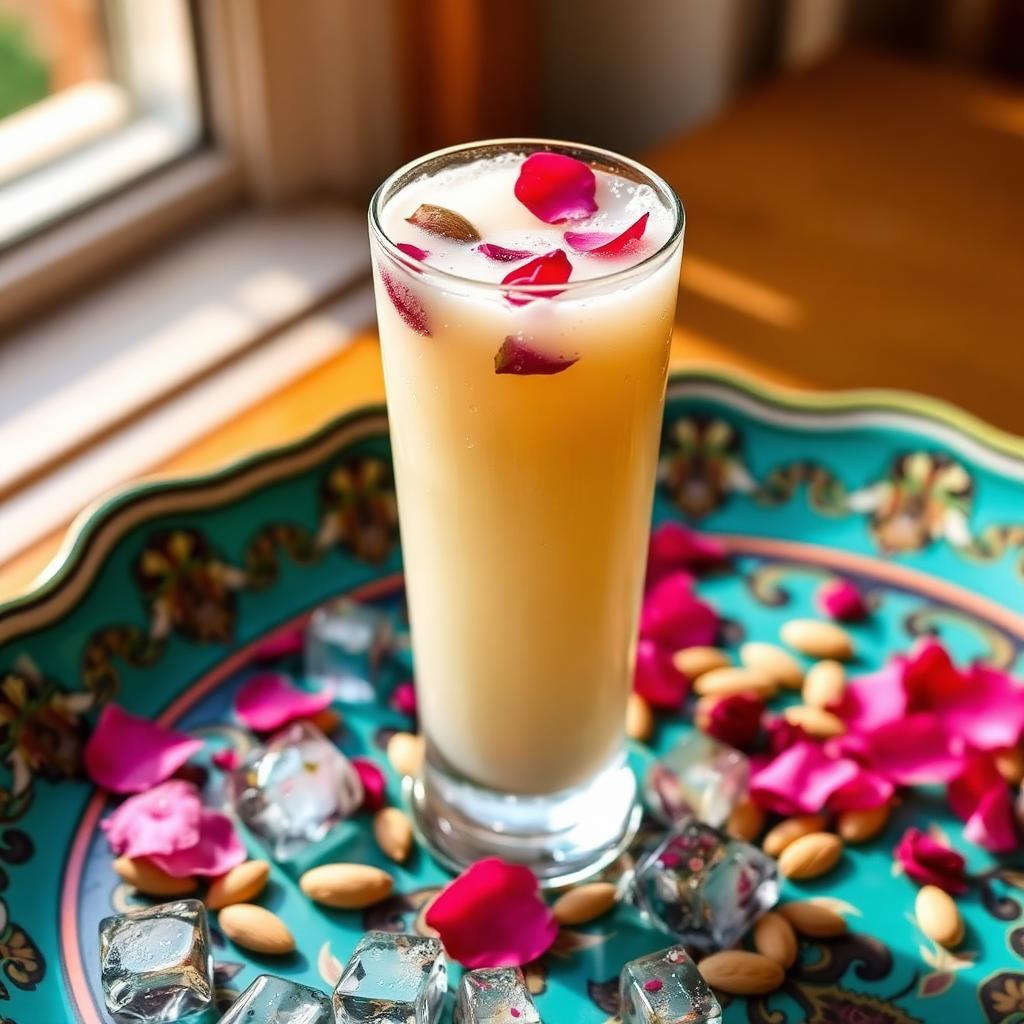
In the kitchen: almond Peel (Skin) Tea, almond Milk (Sharbat-e Bādām), almond Bath, a few drops of cold-pressed almond oil as a finishing oil or skin moisturiser, and 1 oz (~23 nuts) daily for heart-health study amounts.
Other Ways to Use It
Almond flour for grain-free baking.
Eat 1 oz (~23 almonds) daily — soak overnight to mimic the Persian tradition.
In the kitchen: spread almond butter on apple slices or whole-grain toast. Apply sweet almond oil to dry, irritated skin (external only).
Chapter 8 of 15
Medicines and Interactions
Medication interaction:
Antihypertensives (ACE inhibitors, ARBs, CCBs) — A daily 1 oz handful modestly and additively supports blood-pressure control via magnesium, potassium, and endothelial (relating to the thin inner lining of your blood vessels) arginine — a food-scale effect that layers gently with prescribed therapy. (low concern)
Medication interaction:
Antidiabetic medication (metformin, sulfonylureas, insulin) — Trials show almonds blunt the post-meal glucose rise and modestly lower HbA1c (a blood test showing average blood sugar over about three months) at ~50 g/day; additive and gentle. Not a concern at culinary intake. (low concern)
More Interactions to Know
Medication interaction:
Statins — Plant sterols and monounsaturated fats in almonds are complementary to statin LDL (the harmful type of cholesterol) lowering (portfolio-diet trials). No pharmacokinetic interaction. (low concern)
Medication interaction:
Levothyroxine, ciprofloxacin, tetracyclines, bisphosphonates — Calcium and magnesium in almonds can bind these medications and reduce absorption if taken together. Separate the dose by ≥ 2 hours from a heavy almond meal or almond-butter breakfast. (moderate concern)
Chapter 9 of 15
Who Should Be Careful
General caution:
Advanced kidney disease with dietary oxalate (a natural substance in some plants that can add to kidney stones) restriction — almonds are a high-oxalate food; discuss with the renal team.
General caution:
Bitter almonds (Prunus amygdalus var. amara) must not be eaten unprocessed — they contain cyanogenic compounds.
General caution:
Energy-dense — measure portions if managing weight.
Skins contain tannins
General caution:
Skins contain tannins — soaking softens them and improves digestibility.
Allergy:
Confirmed tree-nut (almond) IgE allergy — one of the most common tree-nut allergens.
General caution:
Bitter almond is contraindicated (should not be used) as food at any age — the cyanogenic glycosides make even small quantities dangerous.
Chapter 10 of 15
Pregnancy, Children and Older Adults
General
Children:
Whole nuts and seeds are a choking hazard for young children.
Children:
Whole almonds are a choking hazard for children under age 4 — use ground almond or almond butter.
Pregnancy and breastfeeding
Pregnancy and breastfeeding:
A daily 1 oz handful of sweet almonds (raw, roasted, or soaked-and-peeled) is safe and useful throughout pregnancy — a plant source of magnesium, calcium, vitamin E, and prebiotic (fibre that feeds the helpful bacteria in your gut) fibre. Sweet almond oil is safe topically for the growing belly. Bitter almonds are absolutely avoided in pregnancy given the cyanogenic content.
Chapter 11 of 15
Pregnancy, Children and Older Adults: Other Groups to Consider
Children
Children:
Ground almond, almond flour, and smooth almond butter are appropriate from around 7–8 months (once solids are established), introduced carefully as almond is a common paediatric allergen. Whole almonds wait until age 4 due to choking risk. Warm almond milk with a pinch of cardamom is a classical Persian bedtime drink for restless children.
Older adults
Older adults:
Among the highest-value daily nuts after 60: dense vitamin E and magnesium — two nutrients whose status quietly drops with age — plus plant protein, prebiotic fibre for the microbiome (the community of bacteria living in your gut), and a heart-healthy fat profile. Soaked and peeled almonds are gentler on fragile digestion; almond butter or ground almond stirred into oatmeal solves the chewing challenge without losing the nutrition.
Chapter 12 of 15
Traditional Persian Perspective
Persian temperament: Hot & Moist (1st degree). Ibn Sīnā and Aghili Khorasani classify sweet bādām as warm and moist (1st degree) — nourishing and calming, soothing for a dry chest and irritated digestion, and beautifying for the skin. The bitter variety (bādām talkh) is a separate, restricted medicine — never a food. Soaked and peeled is the classical Persian preparation for a warm constitution.
Persian medicine reads sweet almonds as warming and moistening — food that builds you up, calms the nerves, soothes a dry chest and an irritated gut, and shows in the skin. Soaked, peeled almonds are the old answer for a restless mind and a dry constitution, and almond oil has been used for centuries on the skin for burns, itching, swelling, and irritation.
Chapter 13 of 15
Traditional Persian Perspective: In the Household
Almond oil as a soothing external application for the skin.
Almost every part of the tree — flowers, leaves, bark, fruit, oil — was put to use.
Traditionally calming for the mind and nourishing for the body.
Almonds turn up at every Persian celebration as noql (sugared almond confection), in the sweet almond drink sharbat-e-bademnoosh, and as the green almond chaqāleh badam of early spring.
Chapter 14 of 15
Questions People Ask
How many almonds a day?
Most heart and blood vessel studies use about 1 oz (≈23 almonds, a small handful) per day as part of a balanced diet.
Is almond oil safe on the skin?
Sweet almond oil is widely used as a gentle moisturiser and massage oil and has a long traditional record. Patch-test first if you have a tree-nut allergy.
Chapter 15 of 15
Sources
Almonds: health Professional Fact Sheet — US National Institutes of Health (NIH) — Office of Dietary Supplements. https://ods.od.nih.gov/factsheets/list-all/.
Almonds, raw (FDC ID 170567) — USDA FoodData Central. https://fdc.nal.usda.gov/
Prunus amygdalus / dulcis: herbal monograph — Memorial Sloan Kettering — About Herbs. https://www.mskcc.org/cancer-care/diagnosis-treatment/symptom-management/integrative-medicine/herbs.
The Canon of Medicine: entries on bādām (almond) — Avicenna (Ibn Sīnā), 11th century.
Almond intake and heart and blood vessel risk factors — systematic review — Nutrients / PubMed indexed literature. Https://pubmed.ncbi.nlm.nih.gov/?term=almond+heart and blood vessel