Moringa
The Essentials
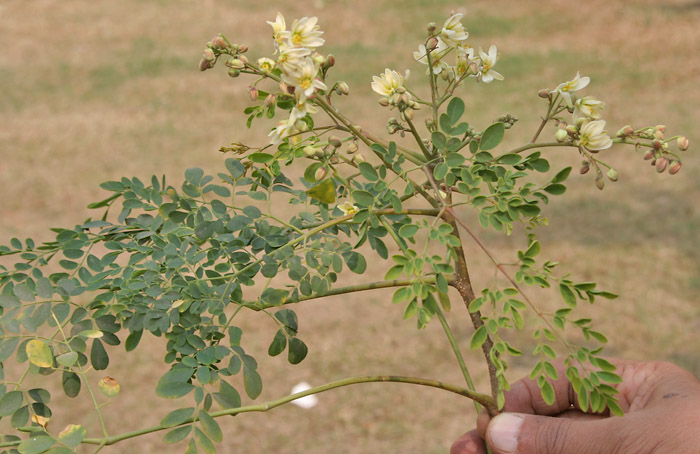
The leaves are the valuable part. They're genuinely nutrient-dense — this part isn't marketing.
Read the whole guide on one page →It's a food first. Treat it like a green vegetable.
Small human trials hint at modest help with blood sugar and cholesterol. The evidence is early.
Moringa isn't a Persian herb. It comes from the foothills of northern India and spread across Africa, the Arabian peninsula and southern Iran, where it grows in Sistan and Baluchestan and along the hot southern coast. Its appeal is simple: these leaves pack in a remarkable amount of nutrition for a plant that grows in dry, poor ground. Dried leaf powder is high in vitamin A precursors, vitamin C, calcium, iron and protein. That's why aid organisations plant it. Beyond nutrition, though, the health claims quickly outgrow the evidence — some small human trials suggest modest effects on blood sugar and blood fats, but they're small and not yet conclusive.
Known to botanists as Moringa oleifera.